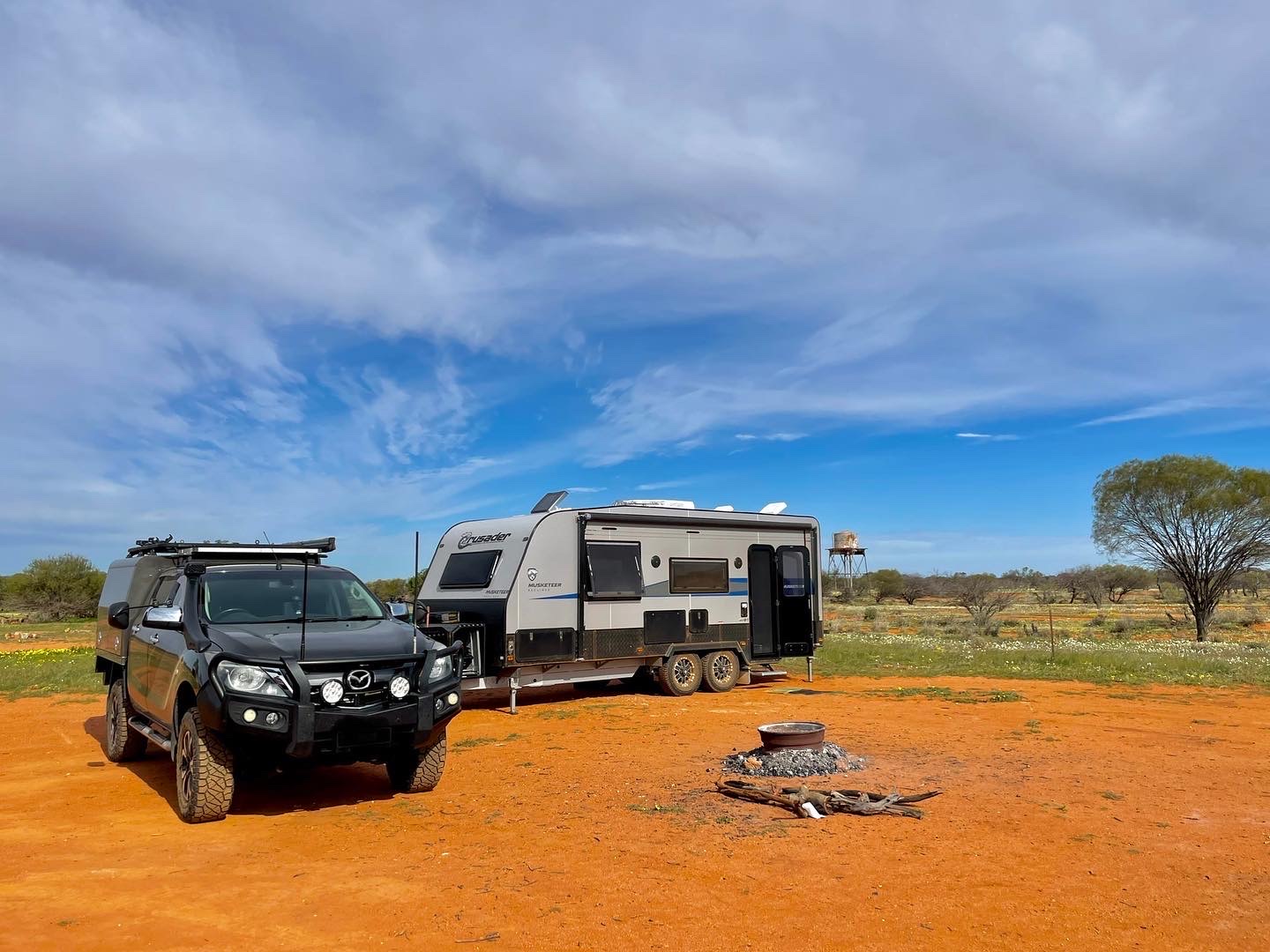
Flinders Ranges
Rawnsley Park
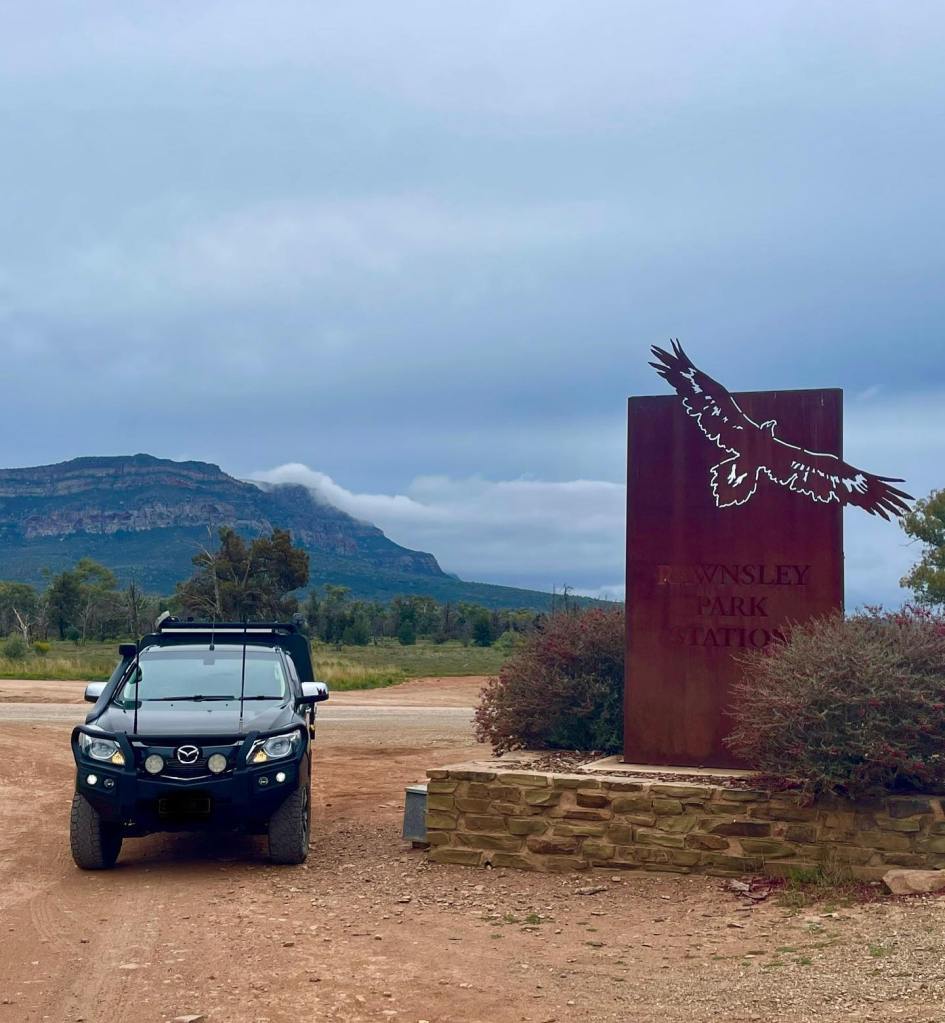

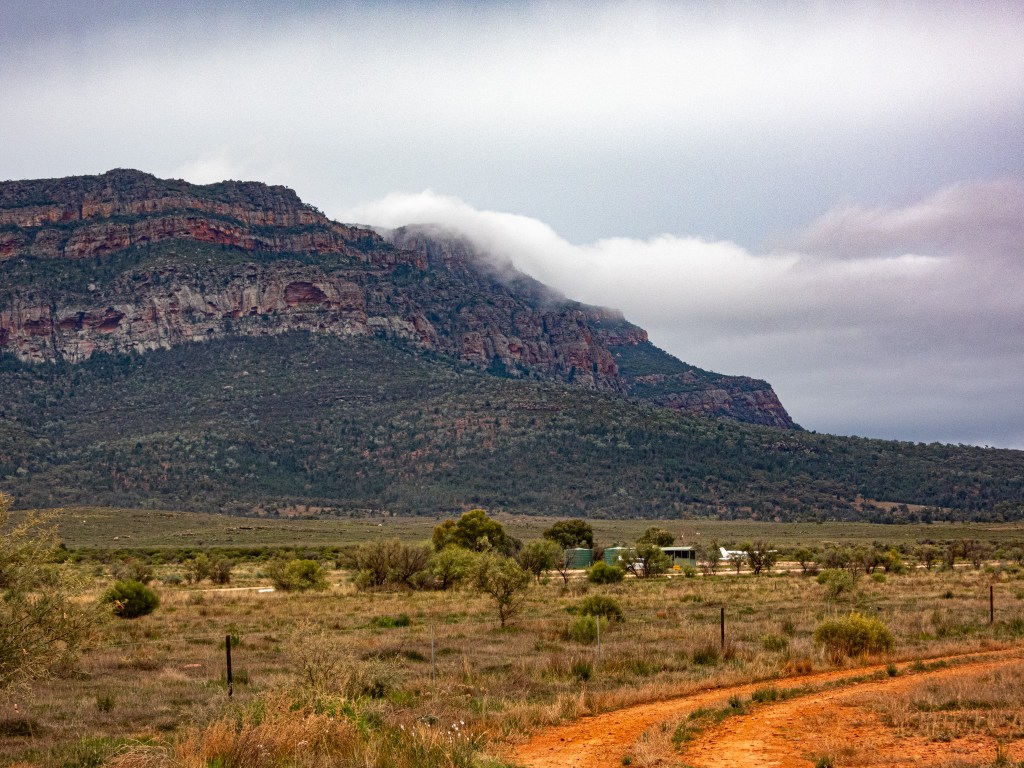
Rawnsley Park is located on 35km north of Hawker nestled at the base of the Wilpena Pound. c.1972 Rawnsley Park Resort has evolved since then. The history here is long, strong and unique but also close to my heart and family. Primarily sheep country, they grow Dohne/Merino X here. Taste test tomorrow night at the Woolshed restaurant. We drive on past the cabins and eco-lodge, the Woolshed and wind our way along the road, across the creek to the caravan park nestled on the hillside with views of Rawnsley Bluff. If you have never been, you must put this place on your bucket list!! It is very accessible to 2WD vehicles, and there is a wide range of accommodation to suit everyone. The park is very busy and we booked in a week ago. Plenty of off-grid and generator camping further west along the ridge, but we are happy with this site. After settling in we drive to a couple of lookouts to gain a perspective of the area. Finishing tonight off with drinks around a traditional campfire.
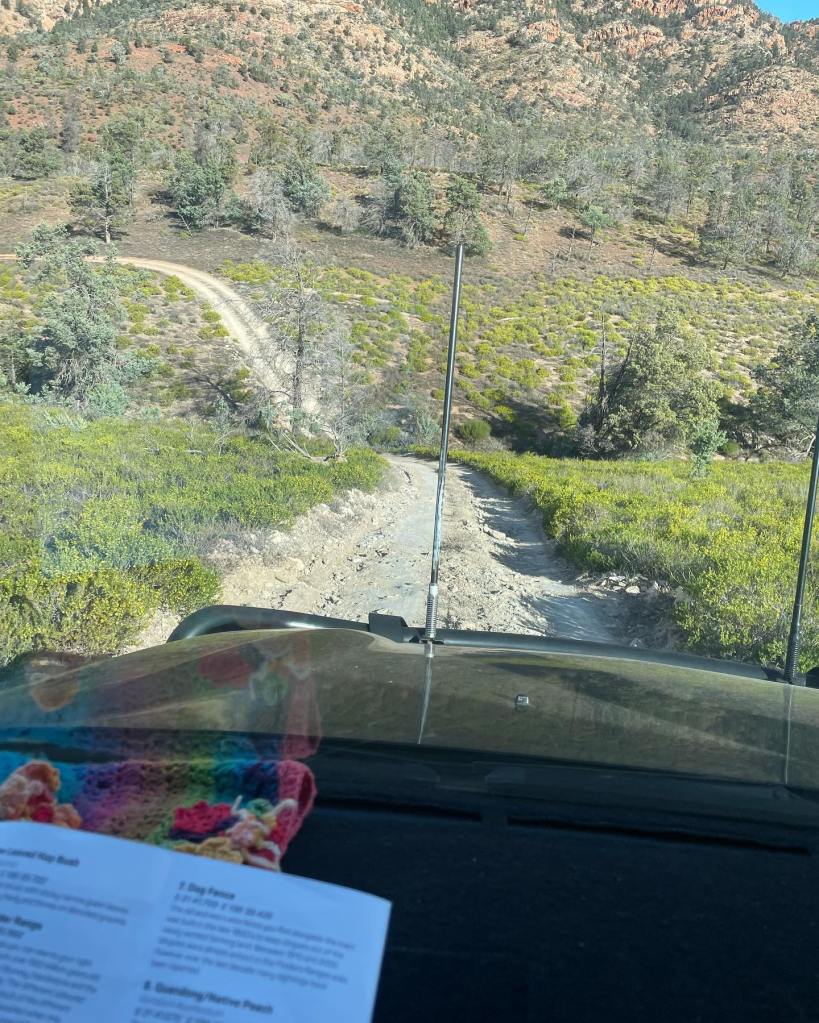
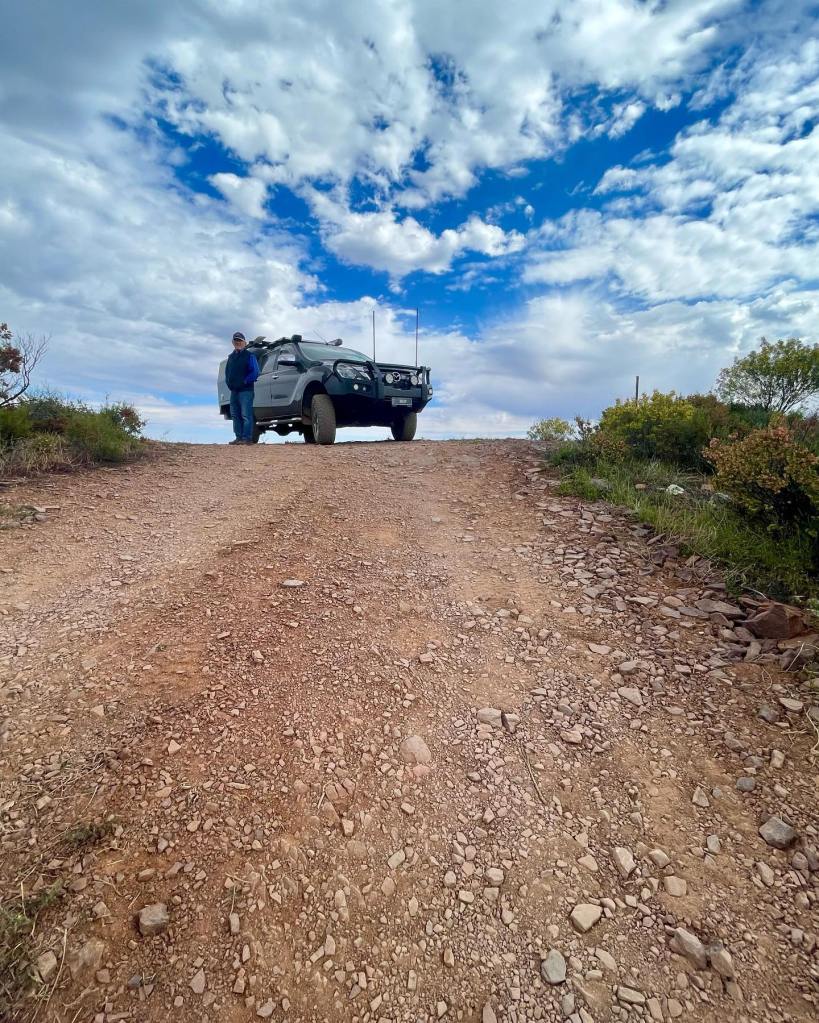


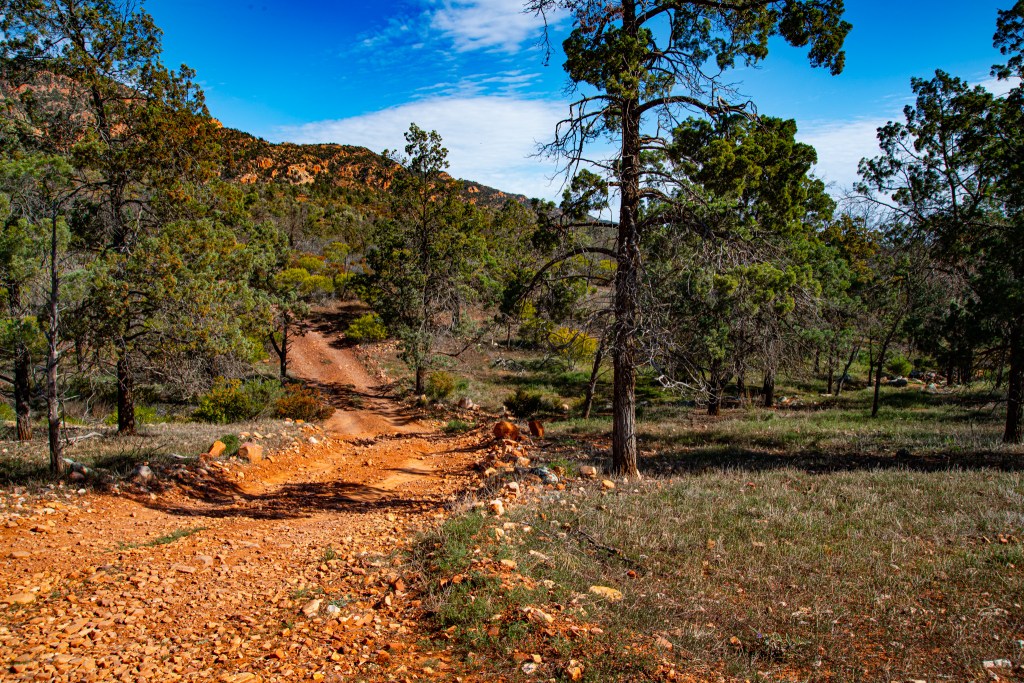
4WD Flinders Rangers self-drive!! All I can say is wow!! If you think the Pilbara or Kimberleys are amazing for 4WD, you haven’t done the Flinders!! The creeks here really test you and your 4WD out!! Going down into creeks where you cannot see the bottom, then coming up the other side dealing with shale rock, gullies and steep banks. But we made it. Saw some spectacular views and the landscape is lush and green. The first part climbing to the top of the ridge then following it along was scenic, but then we came down to the plains before climbing again to drive along the edge of the Chase Range. The photos just don’t do the drive justice.
Wilpena Pound


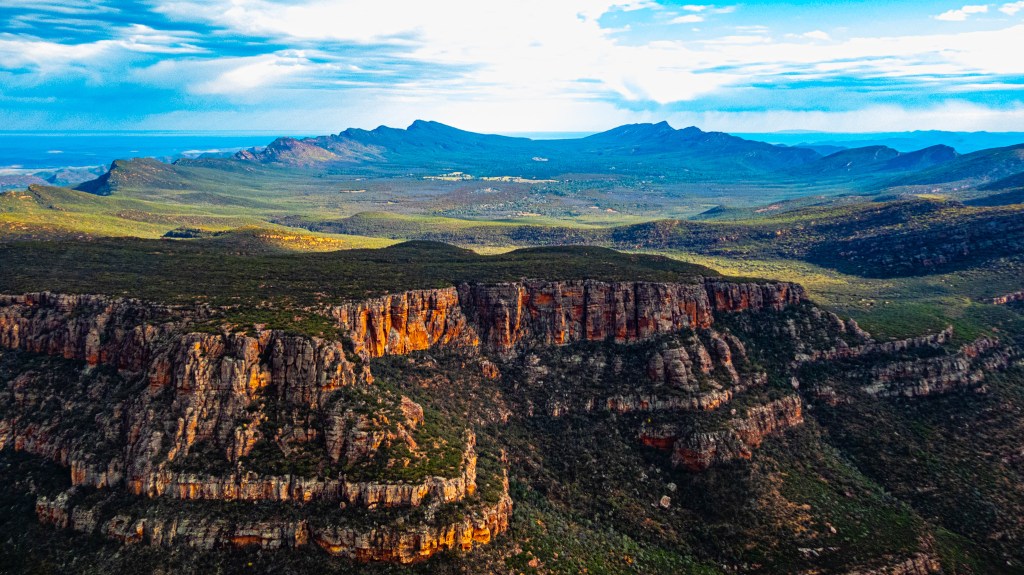
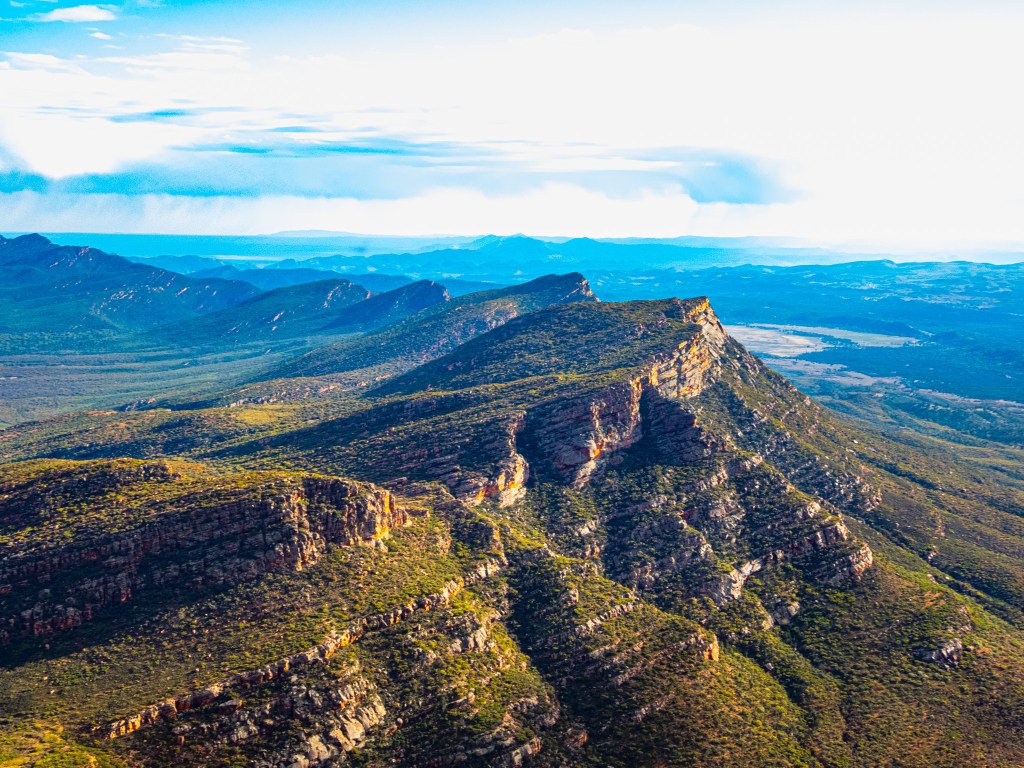
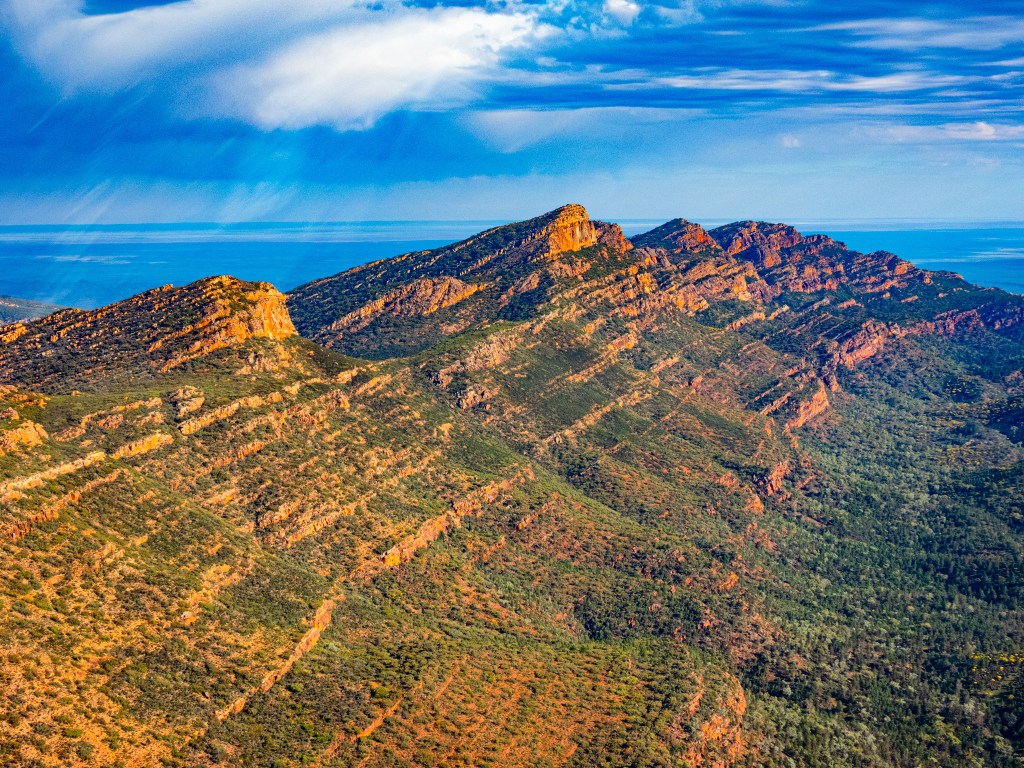
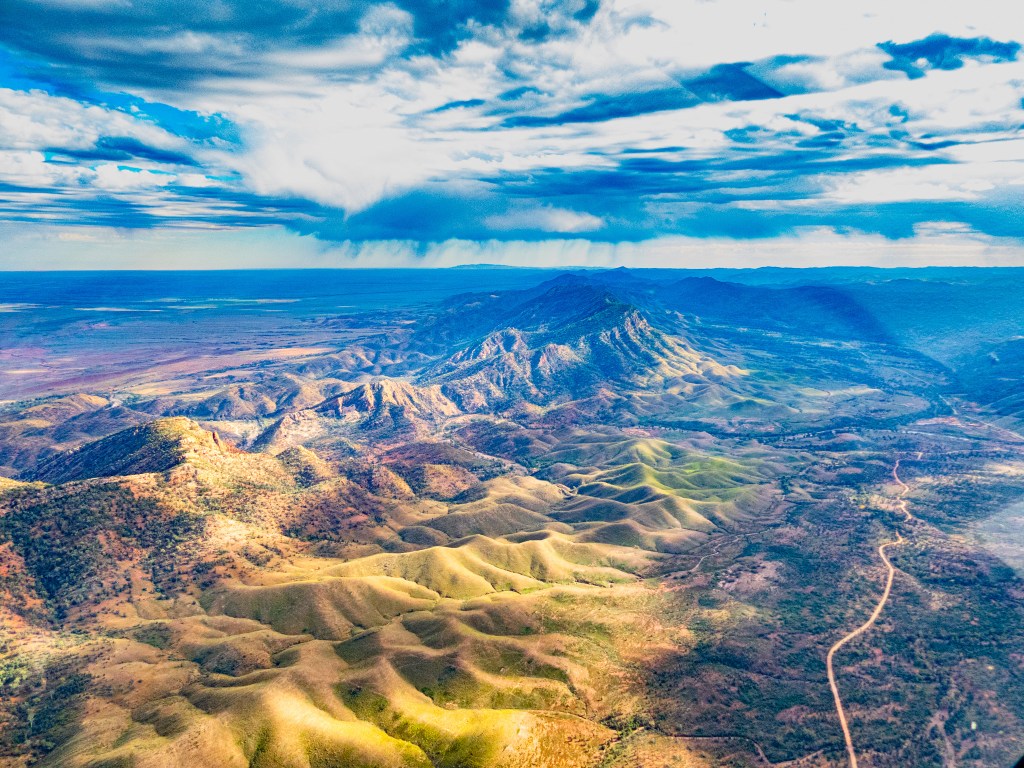
Wilpena Pound in a  What an exceptional experience flying over Wilpena Pound and the gorges. This place from the air is something else. A little rain in the morning but it cleared enough to provide some great photos!! The geology of the ranges is incredible and displays itself in different light providing varied perspectives of the landscape.
Wilpena Pound is extra special for me as my Dad (Peter Baker) always told us his experience of being involved in the search for a lost 10 year old boy in 1959. Sadly, the young boys remain’s were found 2 years later in Sept 1961. In approximately 1964/65 as a family, we went camping nearby. I remember Dad cooking Kangaroo tail stew from a roo they had shot that day!! So here I am again nearly 60 years later camped in the Flinders, but tonight we will dine on lamb!!
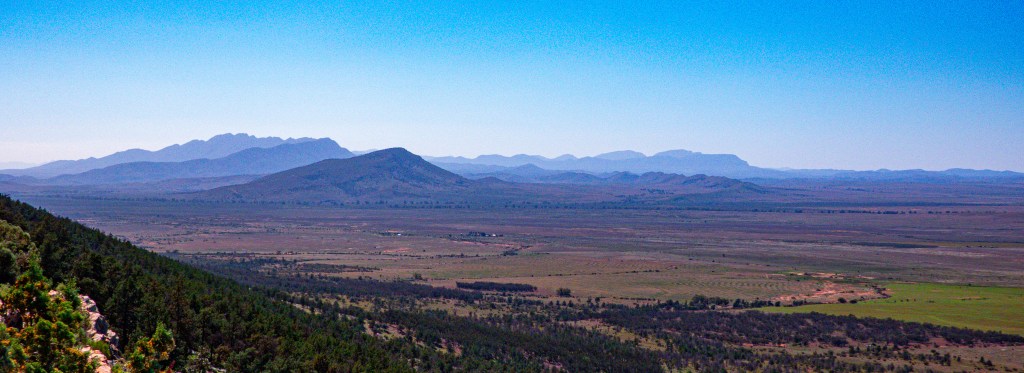
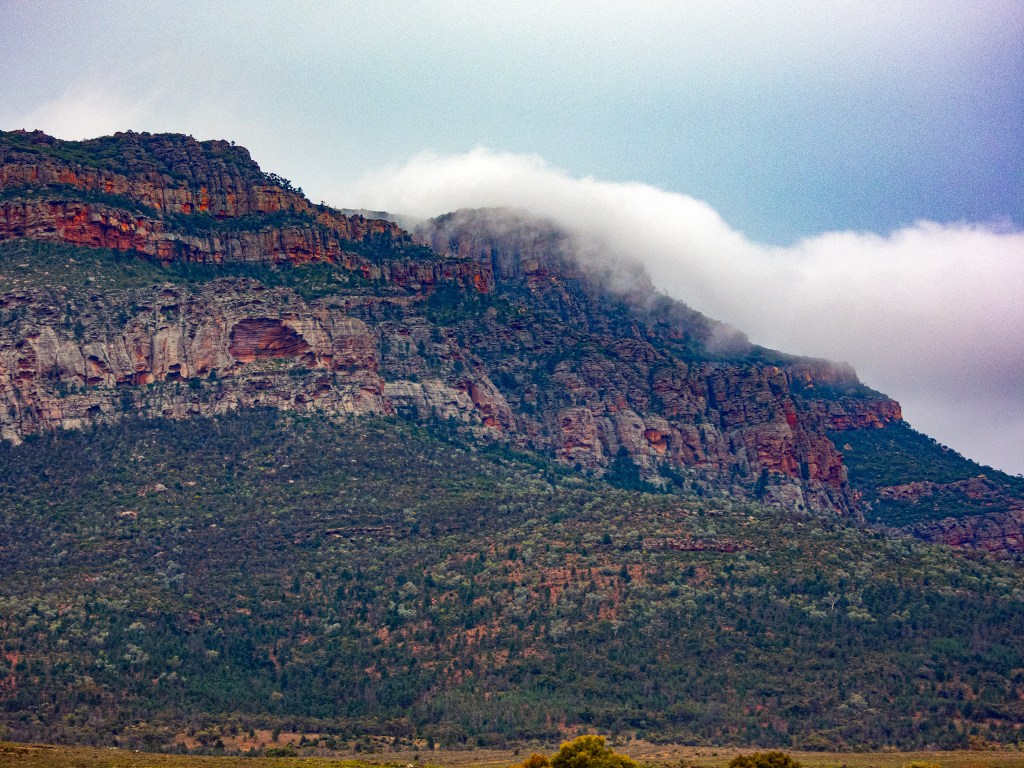
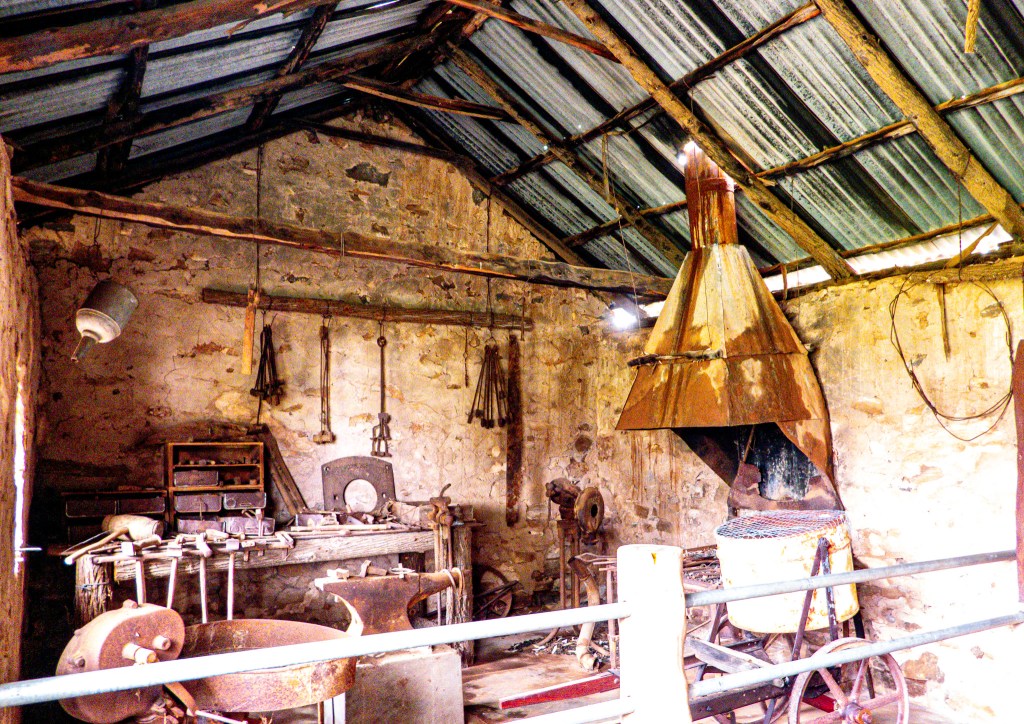
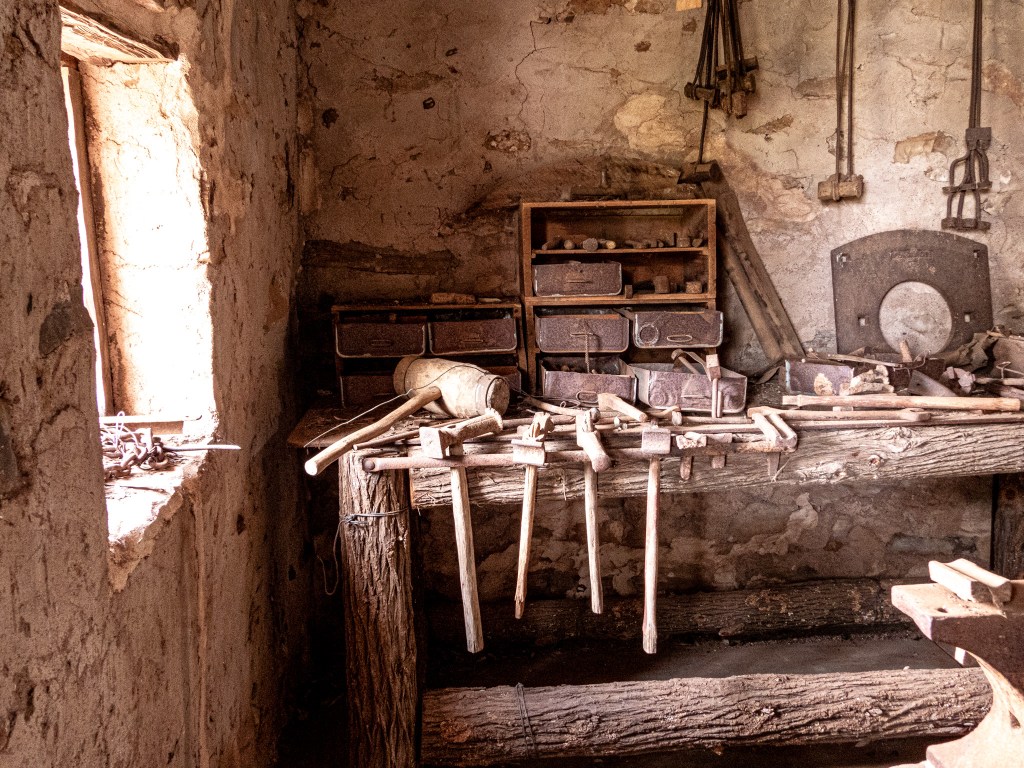
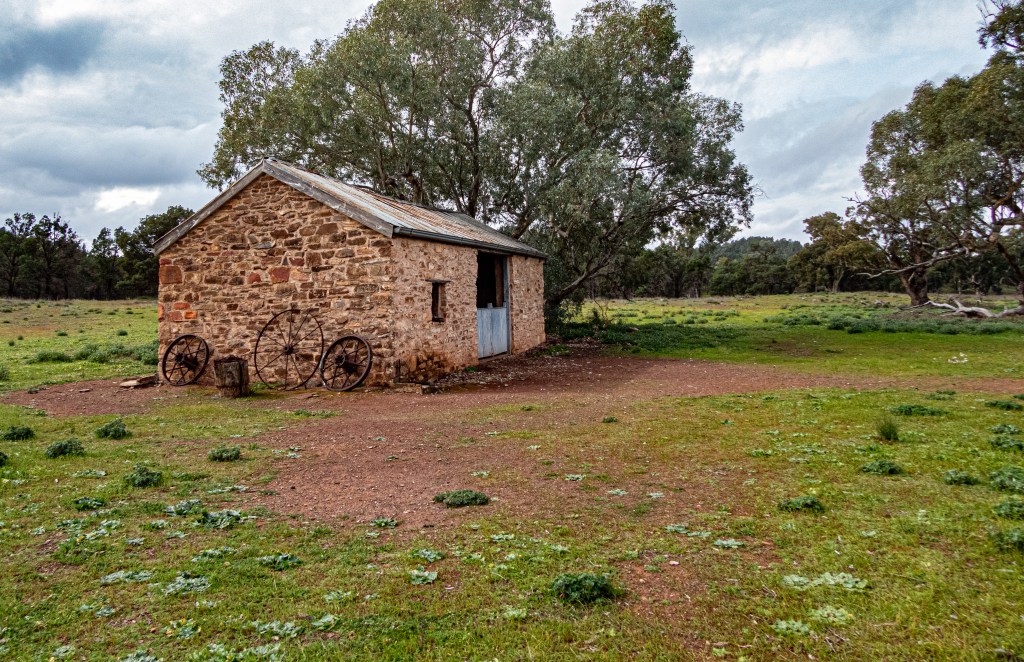
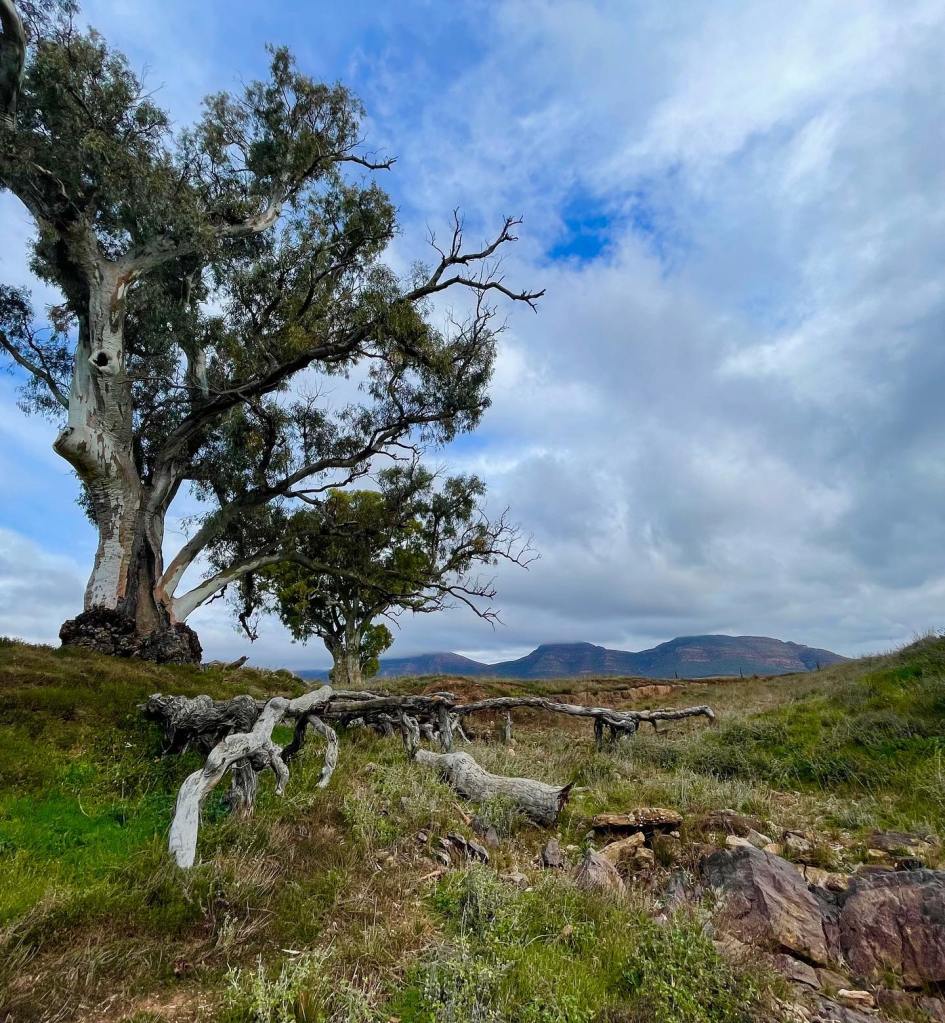
Wilpena Pound from the ground. The weather turned to light sprinkling of showers in the morning with the peaks of the pound’s ranges rim shrouded in cloud giving off a mystical feel. We drove into Wilpena to check out the resort, caravan park and camp ground. Too damp to take some walks so we drive back out the Woolshed and Wilpena station homestead and buildings. The last shearing was done there in 1985. We enjoy our lunch with a mob of young inquisitive emus at the Woolshed before driving onto the homestead and outbuildings. Here is an interesting display of restored buildings. We met a volunteer couple who come to the pound for 6 days every 6 weeks. Amazing people. The most intriguing standout in this country is the big river gum trees. They come in all shapes and sizes with their girths huge. One massive tree next to the homestead is believed to be 1200 years old and is home to thousands of micro bats. This truly is unique country.


Blinman
Our time at Rawnsley has come to an end. We drive further north to the historic town of Blinman. We stop on the north side of the pound for morning tea with a trio of emus on our way. We wind our way through some lovely undulating country, still green and lush from the great season. Blinman is a very small town with a population of 27, the youngest just 3mths old. Blinman north is nestled in the valley and was primarily a mining town.


Blinman mine tour – 1858 – Robert Blinman, a shepherd, discovered the potential and took a lease out with several other people. 1862 – The lease was later sold to an English mining company. They mined copper in this small mine of only 165m deep. The shafts were narrow, unlit, unventilated, and dangerous. A total of 200,000tonnes of ore was removed yielding 10,000 tonnes of ore. But the process was very different to today. Each group of miners (usually families) bid for a section to mine. The mine manager took the lowest bidder. Why? Because it saved the mine money.
Families were better at being productive and efficient as they could trust each other. Boys were put to work at the top of the mine until they were 14 when they were allowed to work in the mine. Their main job was barrow pushing of the ore. Barrows didn’t have legs so one couldn’t put the barrow down. There were 4 owners of the mine from 1859 to its closure in 1907.

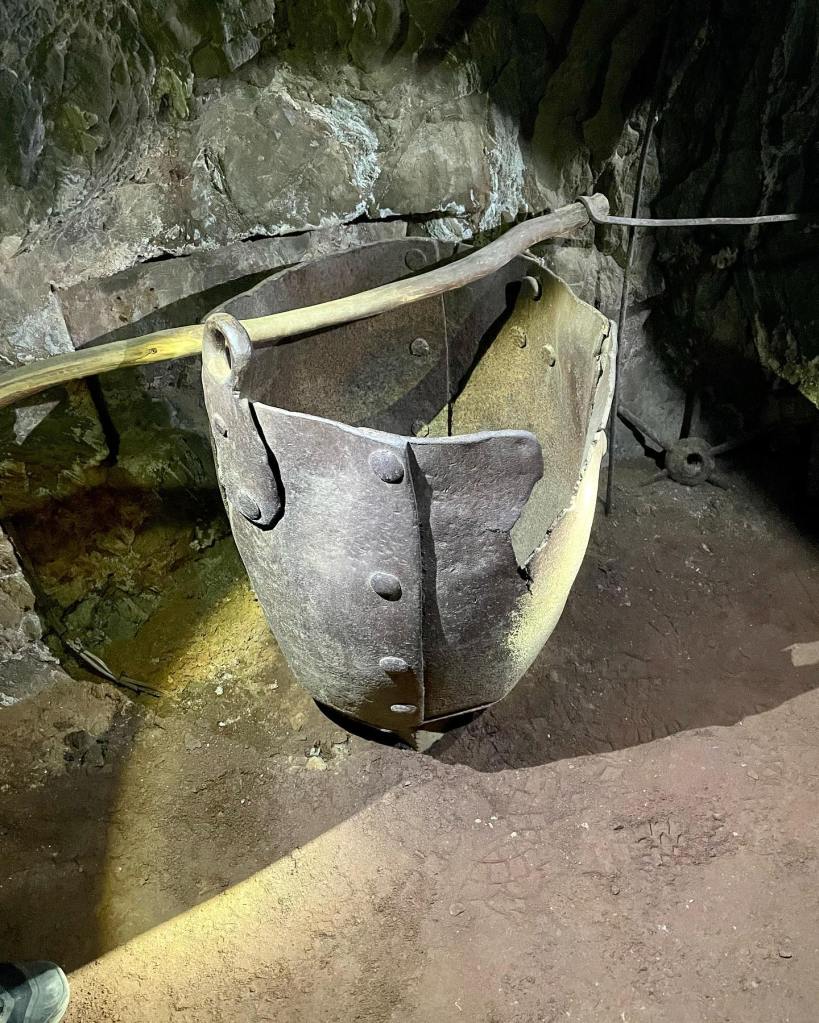
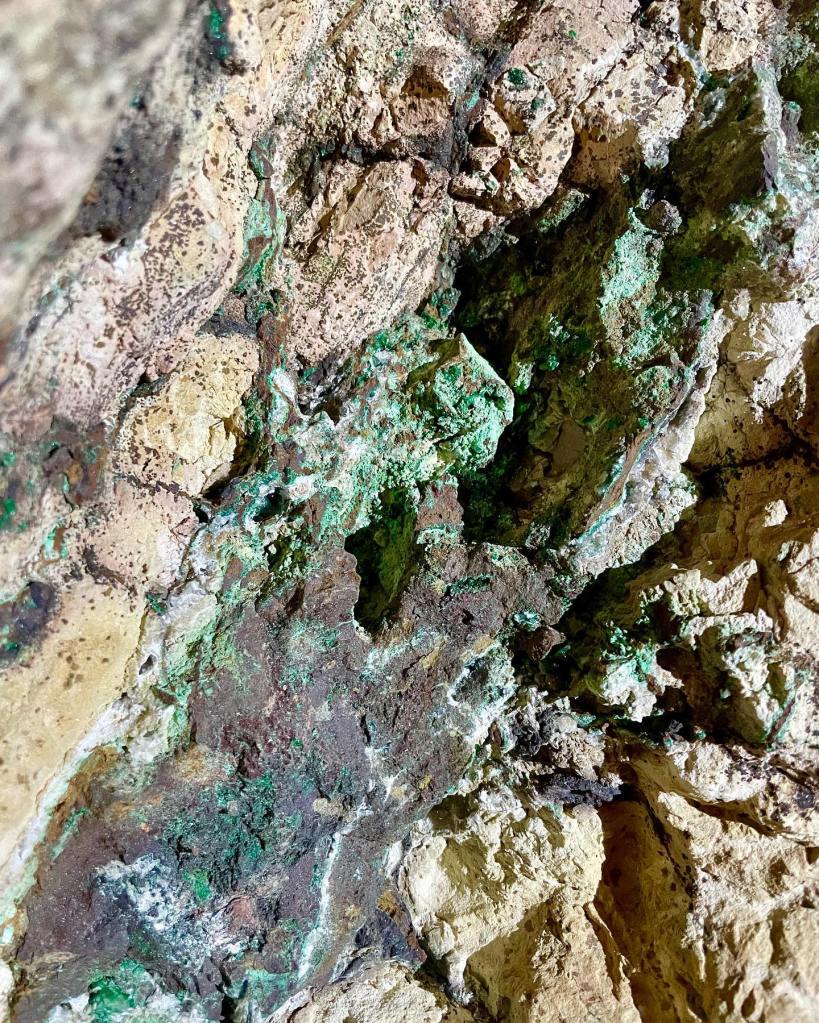
Our camp is at the back of the pub where there were only two other vans. Dinner at the pub was well worth it. The next morning, we head to the Bakery to stock up on their famous bread and coffee.
Clare and Barossa Valleys
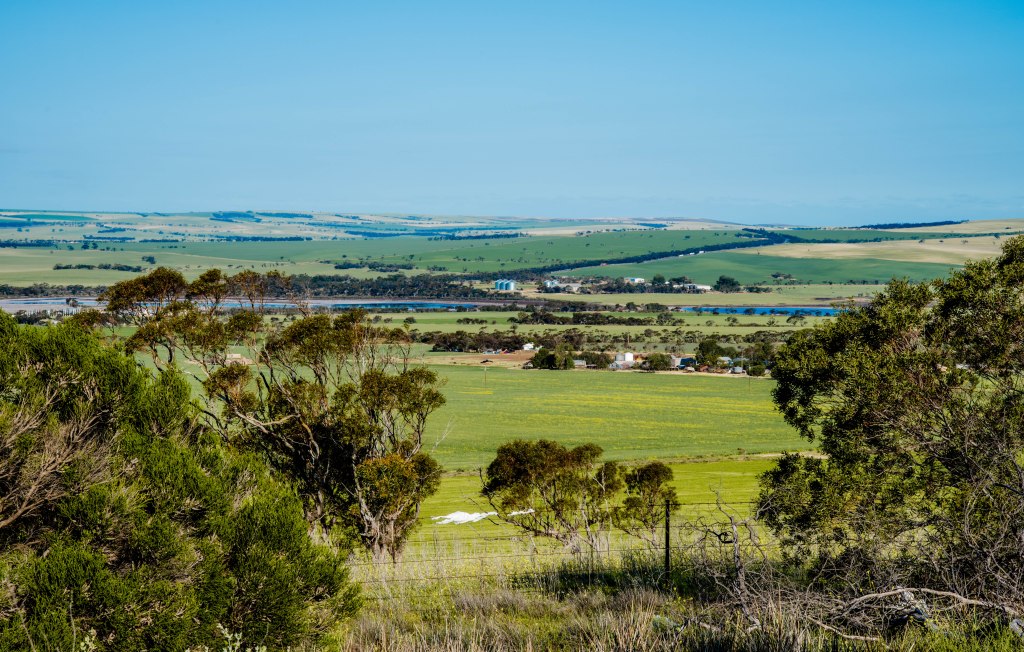
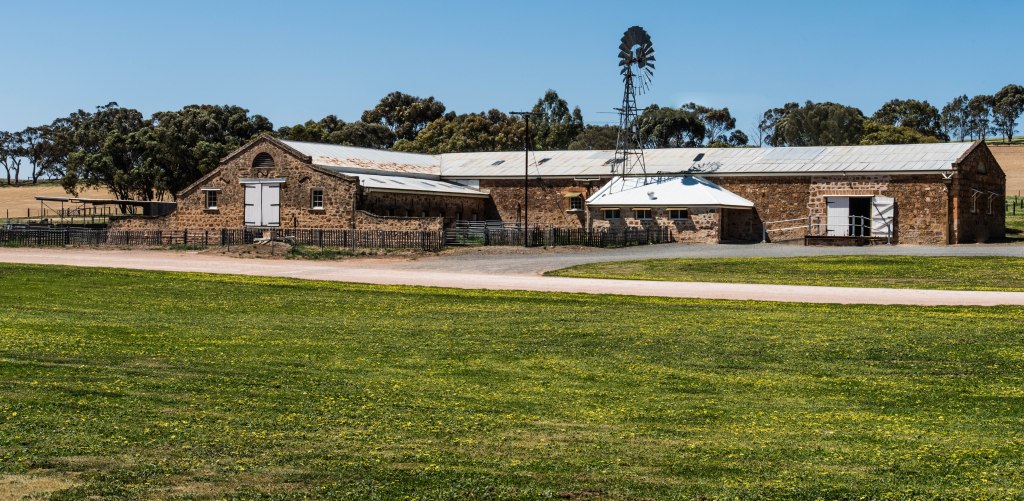
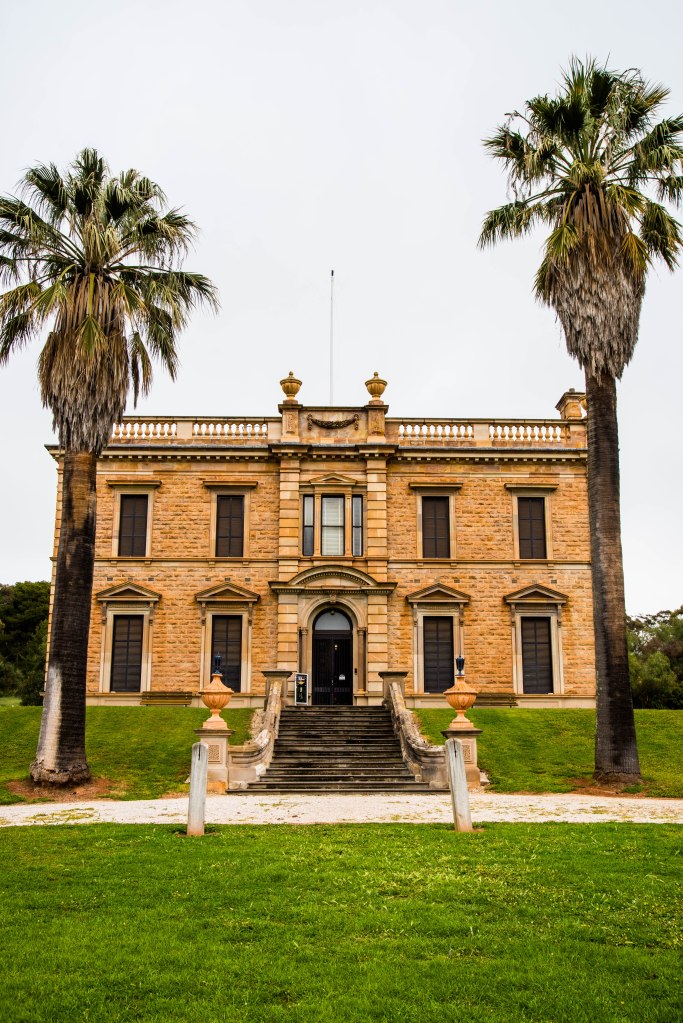

Martindale Hall, Mintaro
If you are visiting the Clare Valley, there are two must visits, one is Bungaree Station and the other is Martindale Hall. Base yourself in Clare or one of the nearby smaller communities, use as a base to explore this beautiful location. Our first stop is the magestic Martindale Hall that is a living museum. Give yourself at least 2-3 hours here, lock your handbag in the car as you cannot take it inside, and just take enough cash to pay for the entry fee and of course your phone and/or camera.

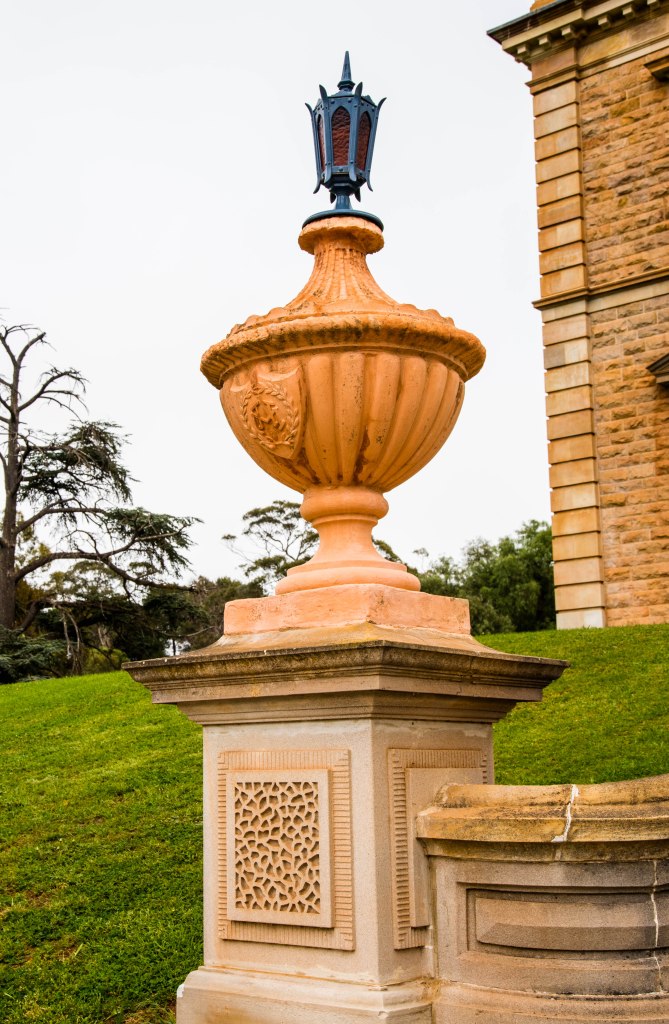

Martindale Hall was built in 1879 – 1880 at a cost of £30,000 for Edmund Bowman Jr. Martindale Hall is built in the Georgian style with Italianate influenced sandstone. The mansion has 32 rooms and boasts a large cellar of some seven rooms and a roof space where the ladies viewed the menfolk in their daily toiling, hunting or other activities. The home, designed by a London architect took 23 months to complete, using 60 of the finest English tradesmen brought out from England. The grounds of the home include a polo ground, a racecourse, a boating lake and a cricket pitch where the English XI played at least once.
William Tennant Mortlock acquired the property in 1891 due to Edmund’s finances suffering severely first during the 1885 onwards drought followed by a depression in Australia which led to a dramatic fall in wool prices.
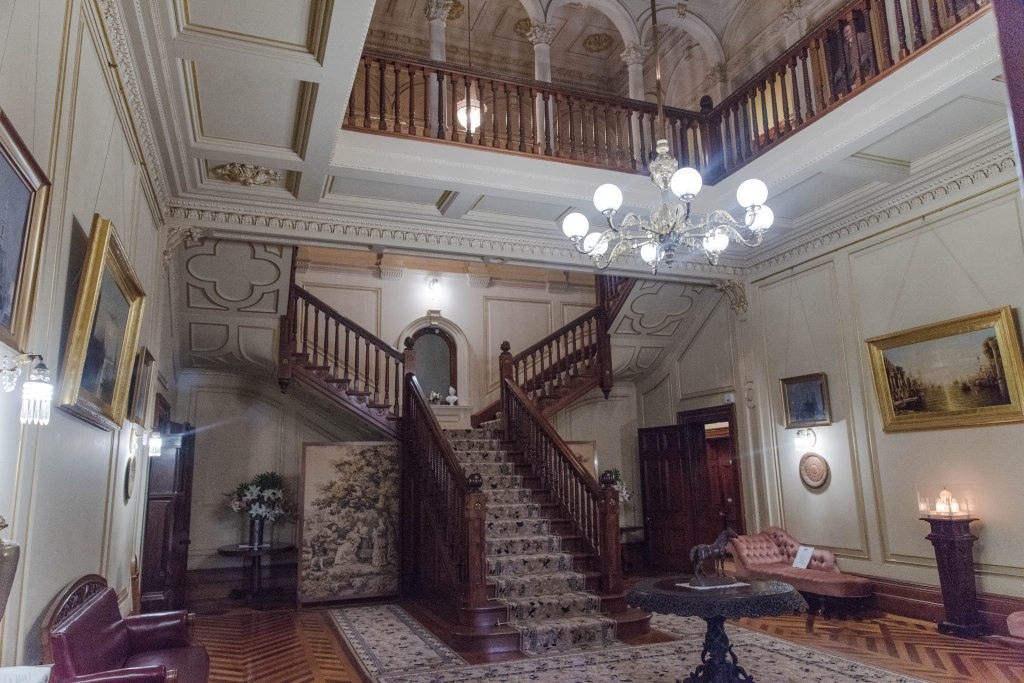
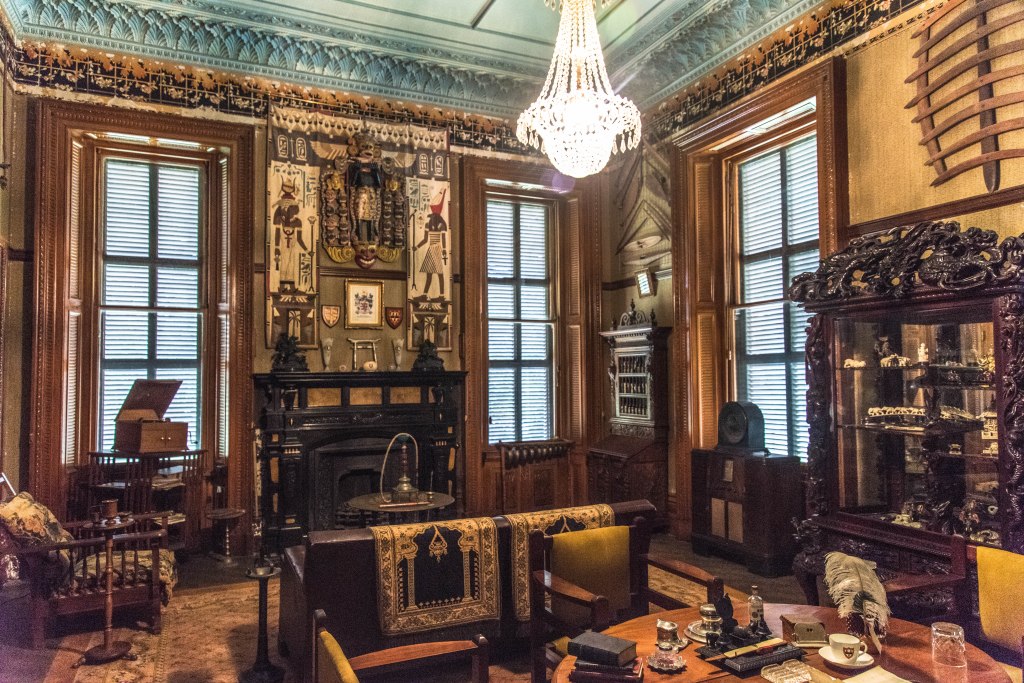

William’s son Jack, who inherited the property from his parents, was a worldly man and travelled extensively and collected artefacts that can be found throughout the Hall today. The only piece of original Bowman furniture in the Hall is the huge Billiard table which is located in the library.
Sadly, Jack died at the age of 55, only 15 months after he married. He bequeathed the Hall to the University of Adelaide with his wife as trustee, and the Hall was later handed over to the University in 1965 and in 1986 was formally placed into the hands of the SA Government including the 45 acres surrounding the Hall.
To visit Martindale Hall today is a unique experience of a living museum, a step back in time to the days of gracious living on a large pastoral estate late in the 1800’s to early 1900’s. Where a rumoured 14 servants, four of which lived in the hall and on call 24 hrs a day, looked after the needs of two people, such was the extravagant upper class lifestyle of the wealthy pastoralist.

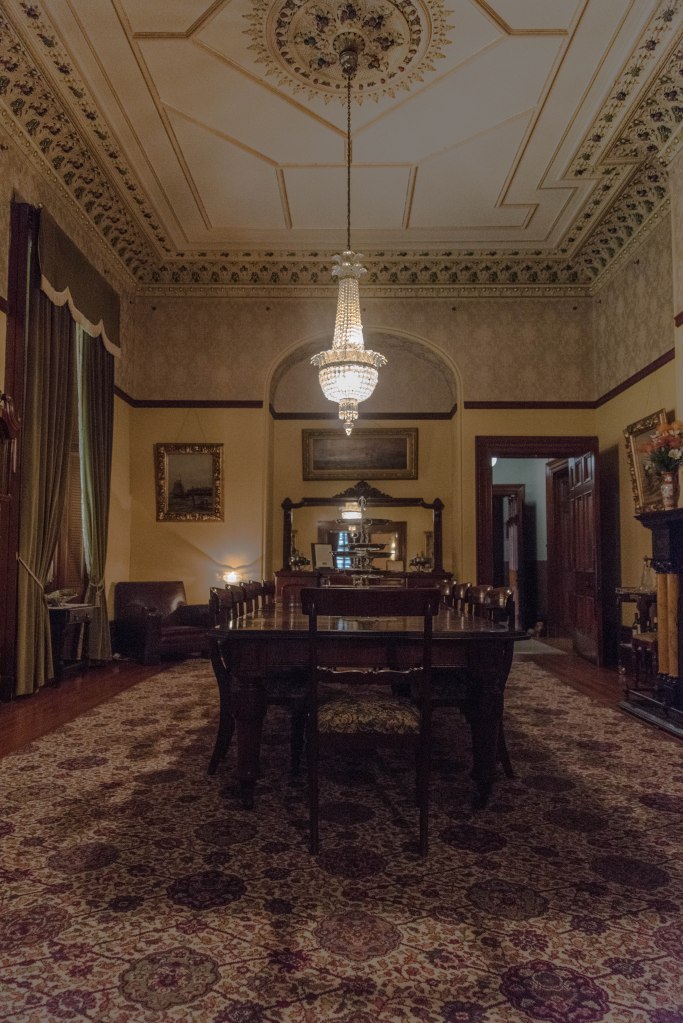
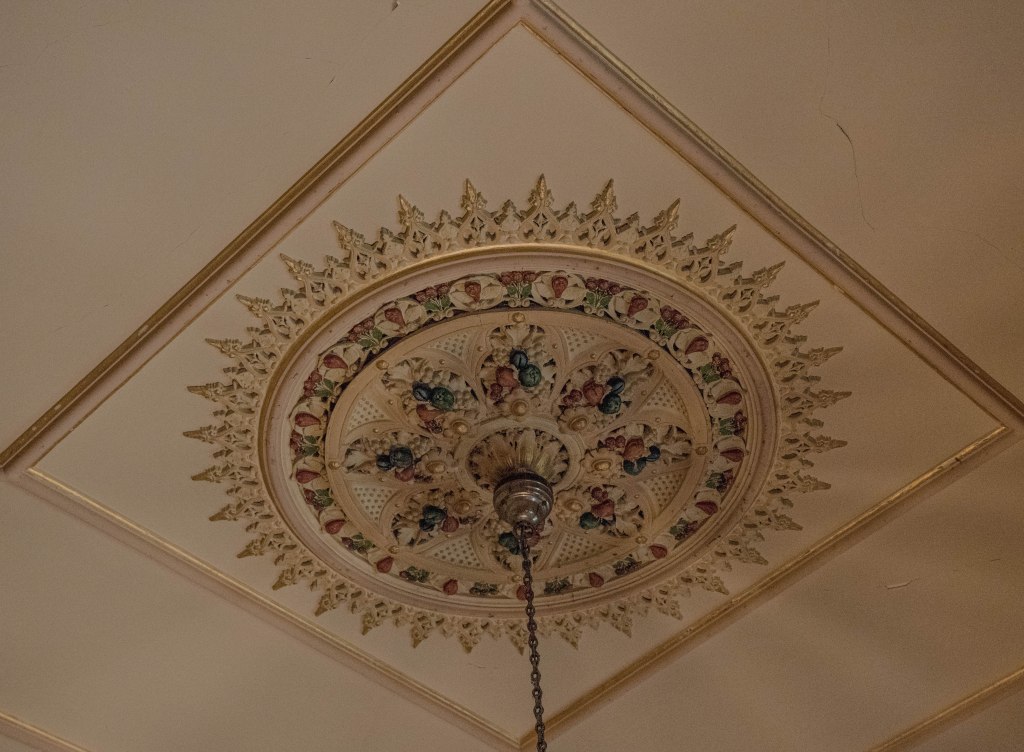
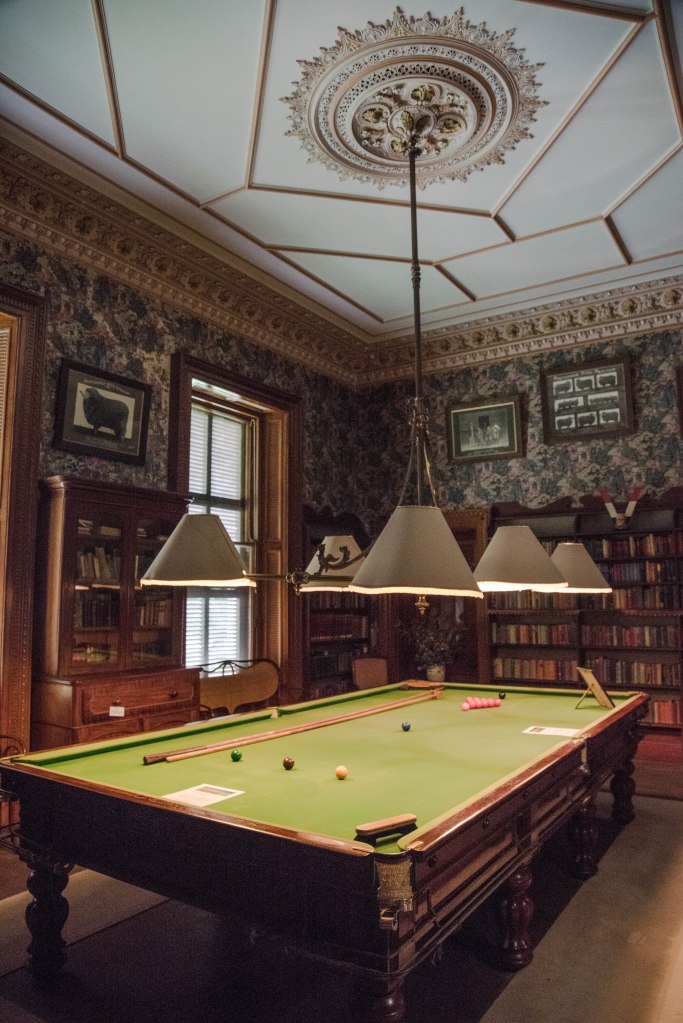
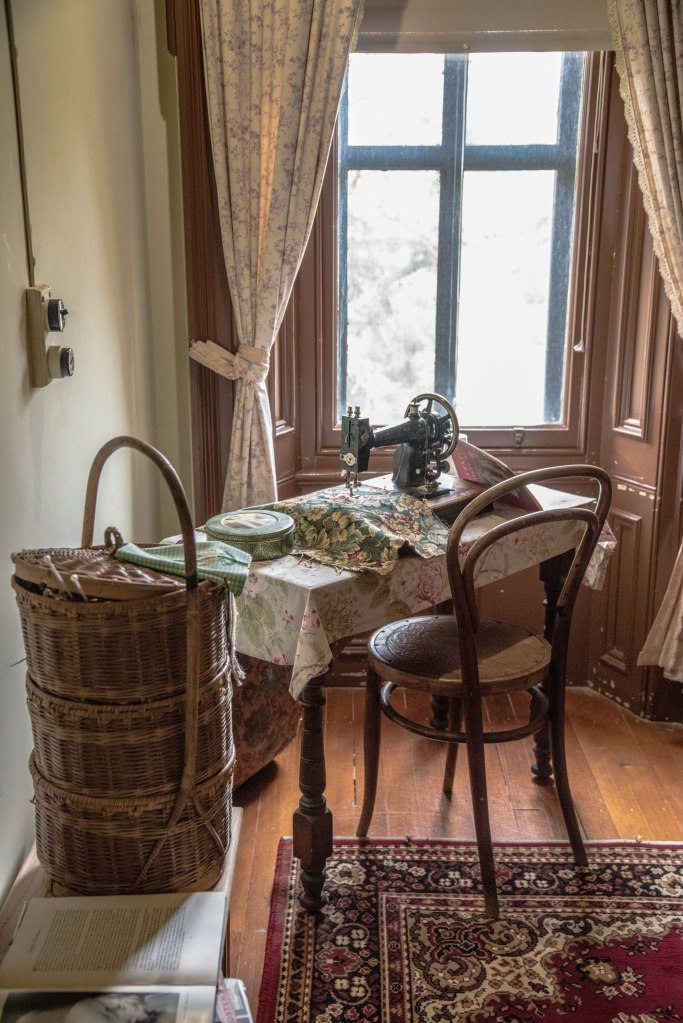
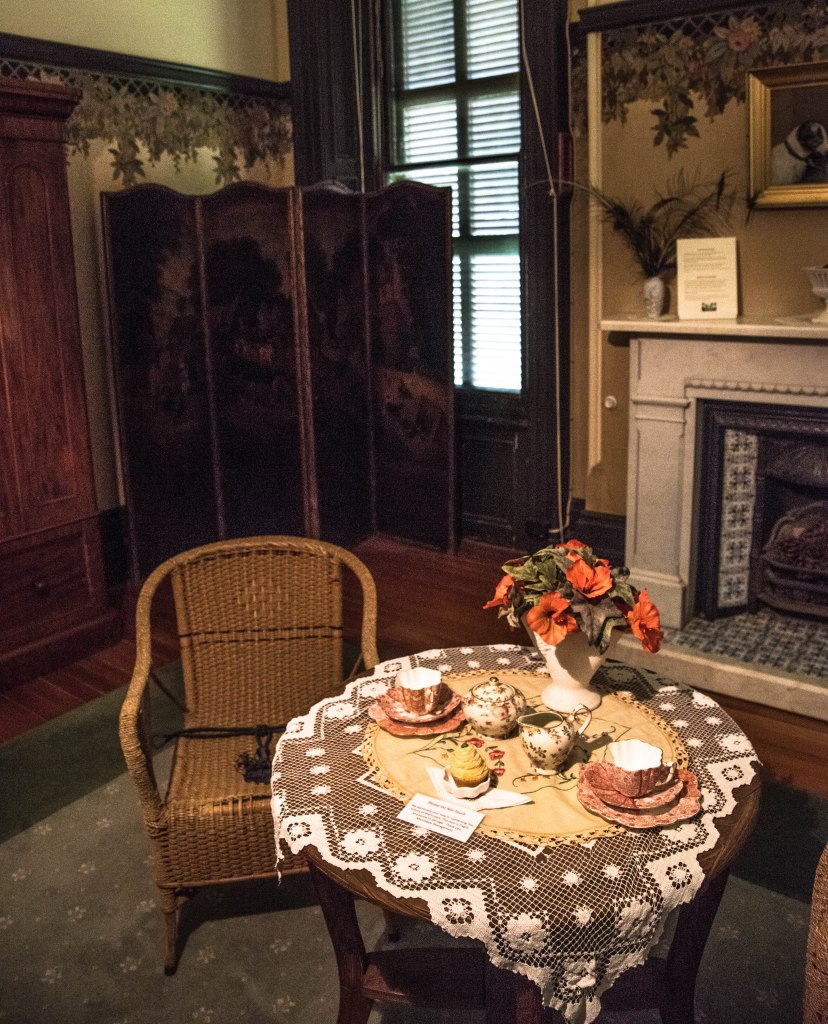
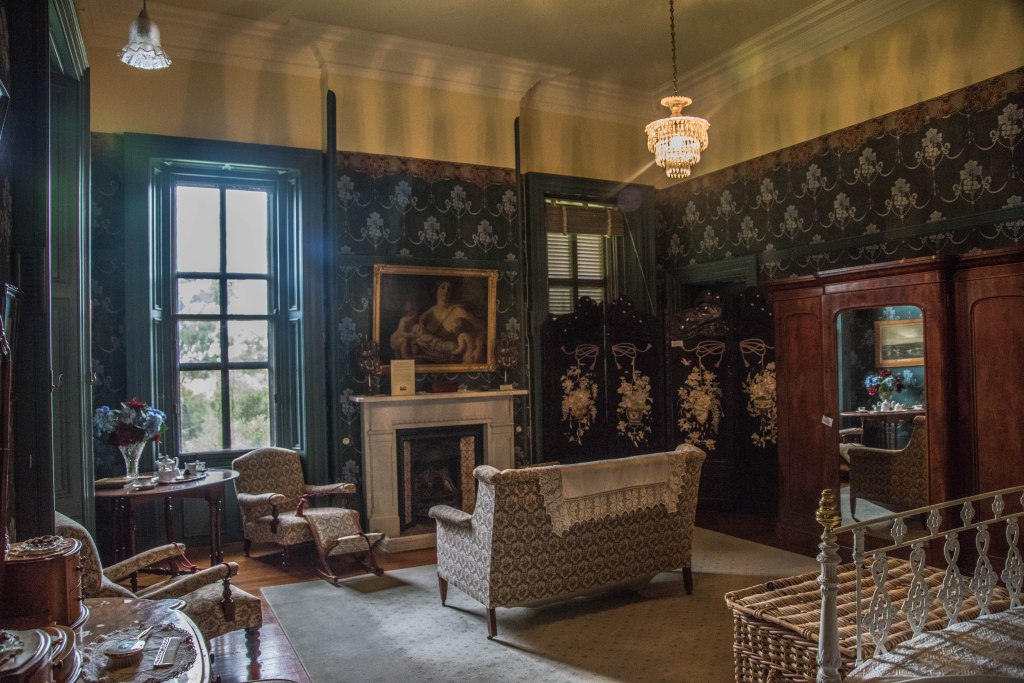
Check a sneak peek at the rooms (above)
Bungaree Station
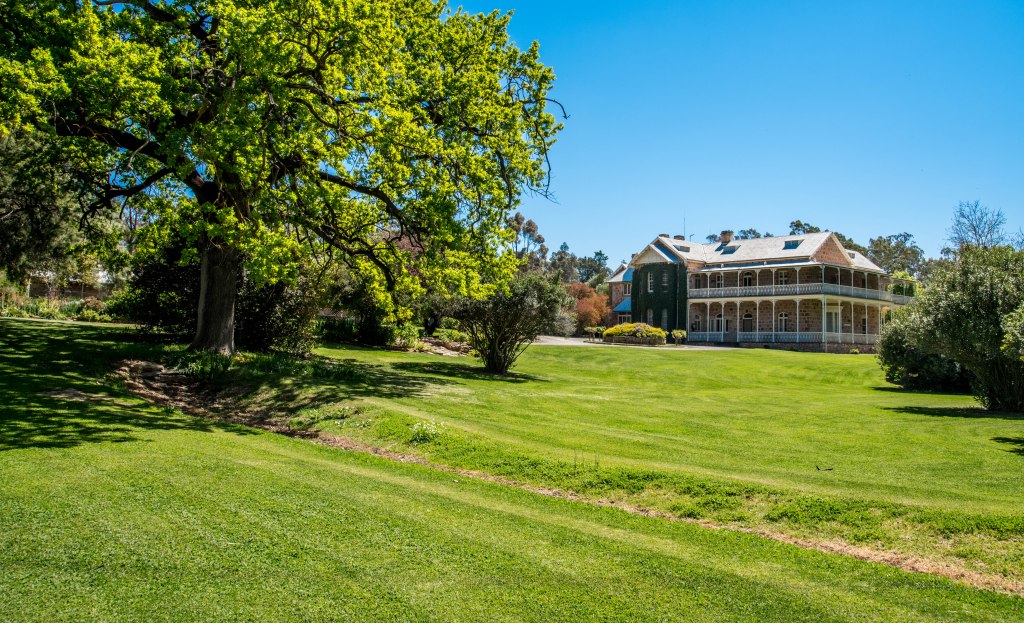
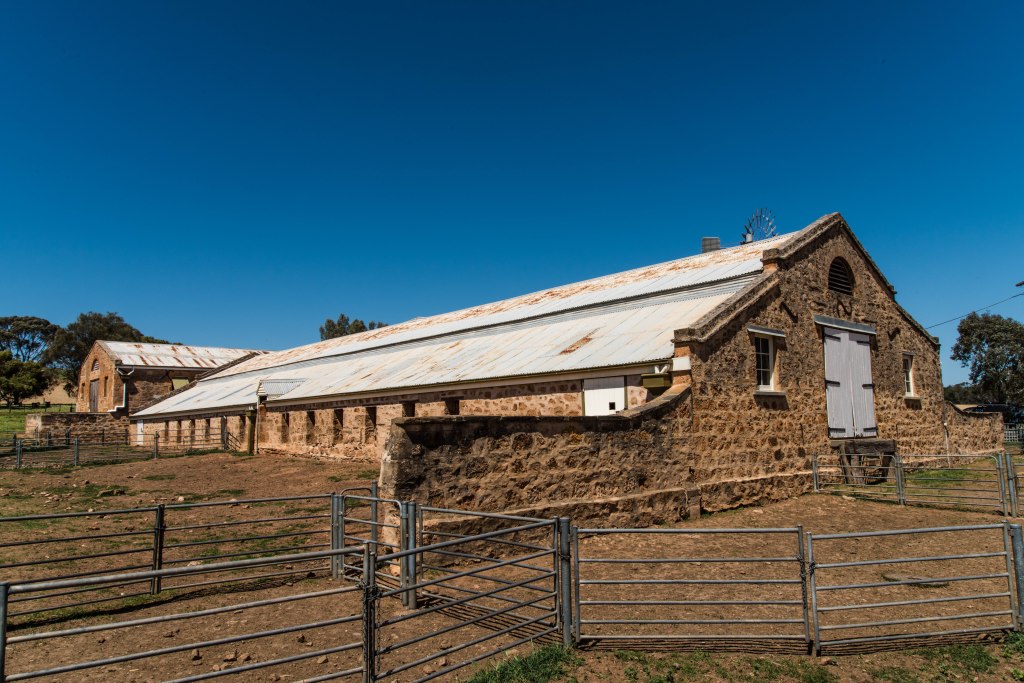
Bungaree Homestead; Part of the Bungaree Shearing Shed
This place requires an individual mention on this blog, purely because of its history and the way the family have restored the property to not just value add to the enterprise and the property’s significant history to SA, but also for us to enjoy and experience. Therefore, it is not surprising this place has been the winner of two State and two National Tourism Awards, including the prestigious R.M. Williams Award for Heritage and Culture.
The station, located north of Clare, was settled on Christmas Day 1841 when South Australia colony was only 5 years old. The Hawker brothers sank a well and upon discovering quality drinking water, staked out their claim calling it Bungaree after the aboriginal name “Bungurrie” meaning ‘my country’ or ‘place of deep water’. They later purchased a total of 267 square miles and by the mid 1880’s they were running 100,000 sheep and employed over 50 staff, the majority of whom lived on the property. As with most properties in the region, it became a small village including the main homestead, woolshed, shearer’s quarters, station store, manager’s house, council chambers, church, staff cottages and stable yards, plus many other out buildings.
Today, over 175 years since the establishment of the property, Bungaree is unchanged and remains the home of the 4th, 5th and 6th generations of the Hawker family.
Driving in from the north end, Bungaree Road winds through the beautiful green rolling hills covered in excellent crops of faba beans, wheat, barley and other grains. As the road gently rises up, on the west side are large modern steel sheds and other functional farming buildings clearly the main hub of today’s farming enterprise for the station. On the opposite side of the road to the east, St Michael’s Church sits proudly on the high point, entry to the original station is located a few meters down the road.
As we enter the original station village, we pass between the twin gums, the location where the Hawker brothers set up their first camp in 1841. As you drive further in towards the main homestead and the information shop, the road takes you down another level.
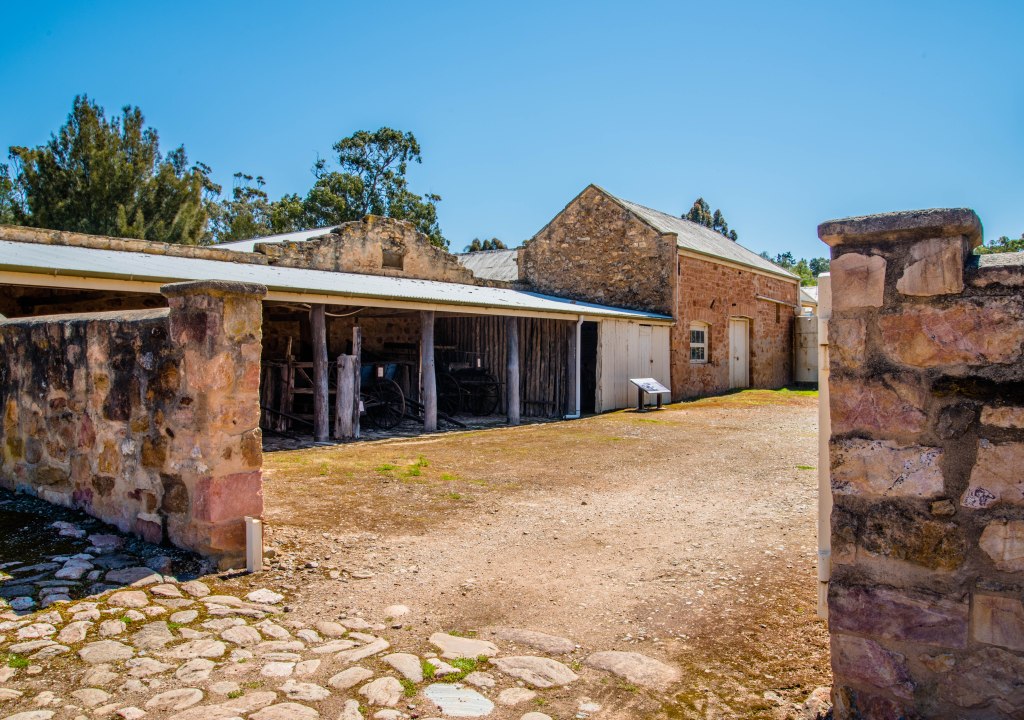

Stables, some of which have been converted to accommodation; St Michaels Church.
The buildings remaining from the original Station are restored to an excellent condition set out in the village format with the Manager’s House and worker cottages on one level, the stable yard, blacksmith, chaff room, stallion box and horse stalls on the next level. Bungaree Station has accommodation and a function room. The stable yard rooms have been converted to luxury accommodation and a section of the shearing shed is used for a function center.
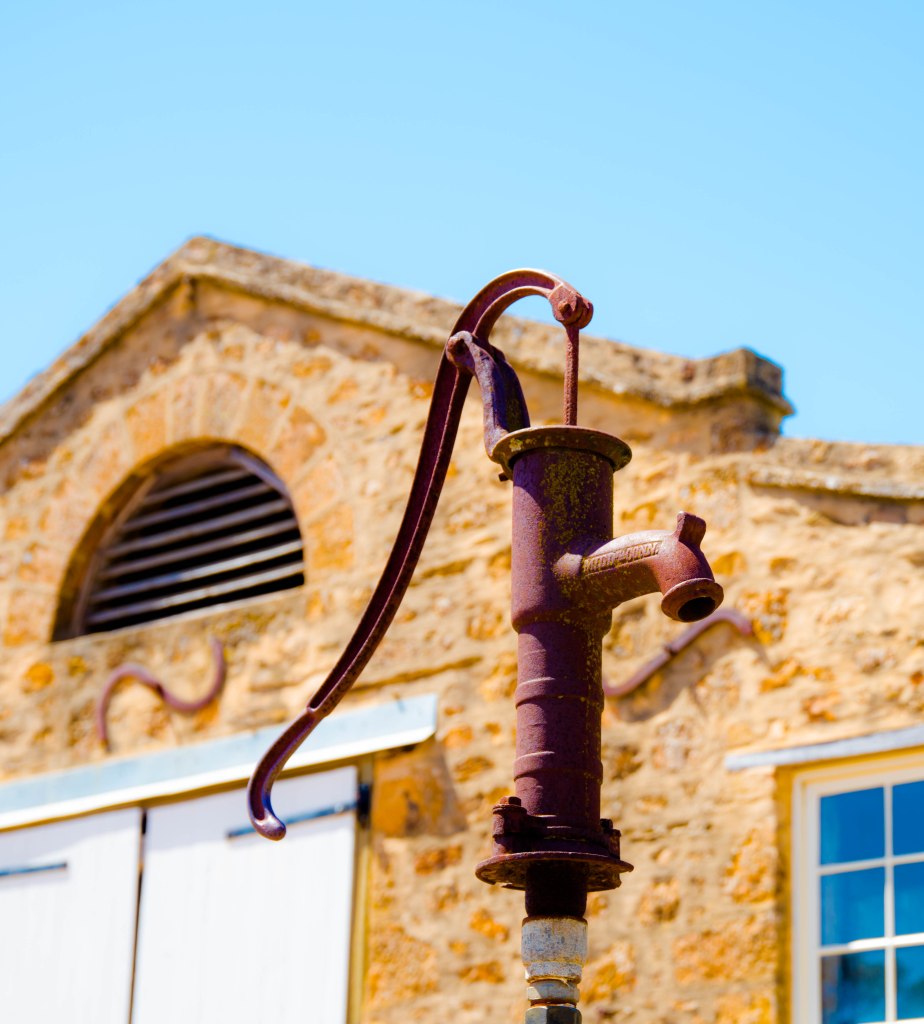
The reception for visitors and guests was the original station store, one can purchase an espresso coffee and whilst you wait for your coffee, you are encouraged to explore the other two rooms set up as they would have been in earlier days with photos and information on the walls. The self-guided tour starts at the store and allows the visitor to walk around at their own pace to view the village, respecting those cottages that are still private residences, listening to the strategically placed audio/information posts. The chaff room and stable areas now house several old equipment from the past with floors made of stone and strategically placed timber like stumps.
Beyond the high stone wall, the impressive homestead is located closer to the creek. As one walks through the high stone wall that divides the main homestead from the stables, one enters the beautiful garden, and beyond that the amazing homestead. The two-story home, built in stages over approximately 60 years, replaced the original slab hut. The well maintained and groomed gardens are typical of an English garden with large oaks and other English trees, a productive orchard and vegetable garden all to the free run of the geese, ducks and guinea fowl.

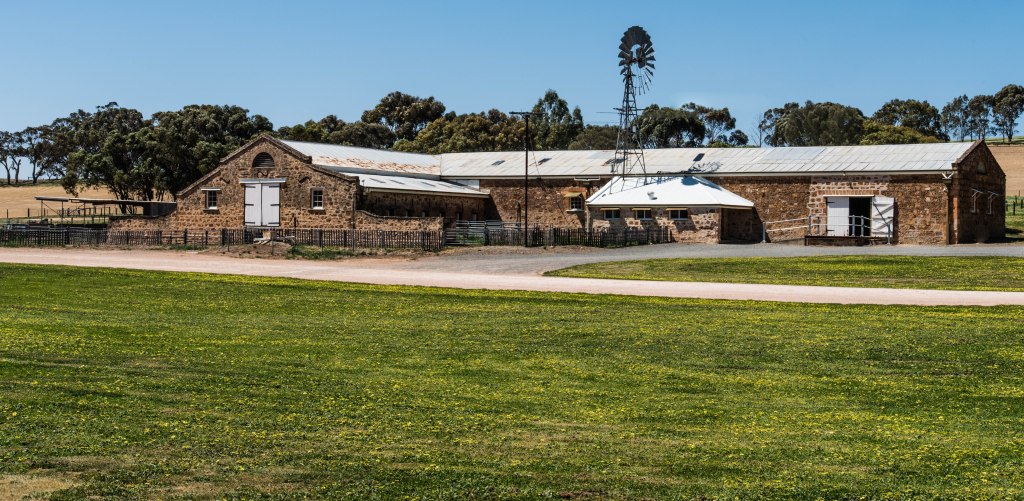
After exploring the house and garden we take a drive approximately a kilometre down the creek. Here stands the majestic shearing shed, large shearer’s quarters, men’s kitchen and swaggy hut.
The shearing shed was the main reason for our visit, with Ian’s sheep experience from husbandry to shearing sheep, these sheds of all types, shapes and sizes are always interesting to explore. The shed is a ‘T’ shape with an adjoining section where sheep/ram sales took place and where it was once used for the additional storage of sheep for shearing.


The shearing shed is known as the Woolshed, it is the oldest building on the property and has been used for 170 years and is still used today for shearing and other sheep husbandry activities. Not all the stands of the original shed are now used and the shed was the scene of many incredible stories available in the audible information post in the shed.
A section of the shed is used for functions and is organically set up complete with a bar, kitchen and displays on the wall, an excellent place for weddings, parties, etc. Visit http://bungareestation.com.au/ for more information.
Hummock Station


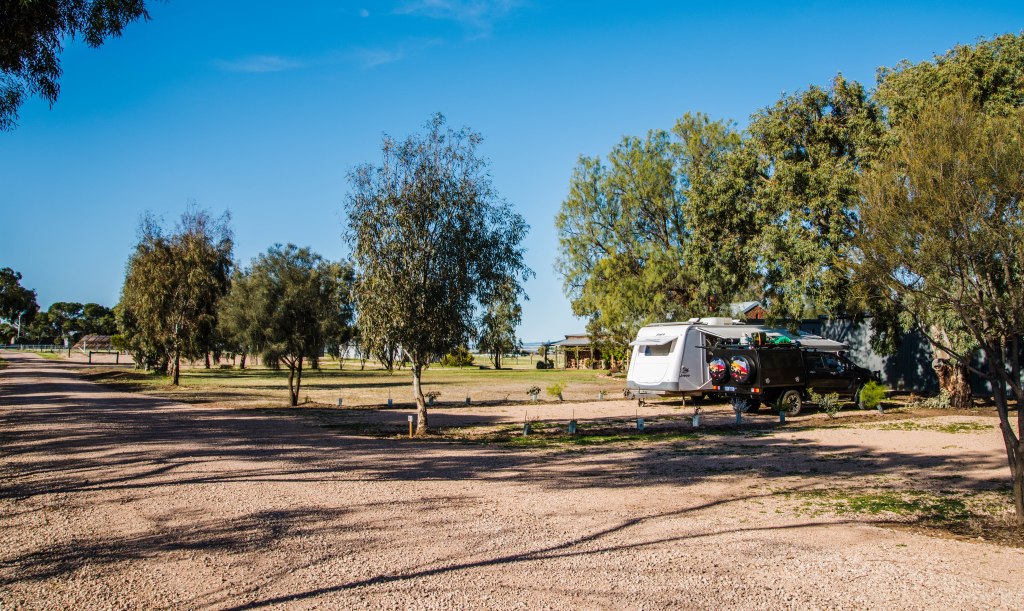
For those travelling from Port Pirie south, this gorgeous little station/farm stay is just perfect. Quiet and peaceful, nestled on the east side of the Barunga Ranges with a crop at your back door and where the birds sing glorious tunes as you awake in the morning. The property is just south of Snowtown on the western edge of the Clare Valley and we can highly recommend it as a long or short stay.
Hummocks Station has mixed grain and stud sheep – merino and Suffolk. I am fascinated with what landholdings are called. It appears that what you call the land, a station, property, farm, hobby farm, holdings, etc., depends on several factors ranging from how it originated, where it is located, how big or small it is and the owner’s history or heritage.
Hummocks Station buildings are built in the colourful iron stone of the area and was established in the early 1860’s. The Station includes the original homestead, restored shearers quarters for B&B and many original out buildings.
The lease was first taken up in 1851 and ran as a sheep station until 1918 when the Government purchased 29,728 acres from the then owner and in 1921 the land was divided up as part of the returned soldier’s scheme. One of the original families to take up some of the land in 1873 was Mr John Michael, and six generations later the Michael family still own this today including other properties to support their enterprises. https://www.hummocksstation.com.au/history/ is where you can read the full history.
The station, snuggled into the east side of the Barunga Ranges, the paddocks are planted with healthy crops, despite the season having one of the lowest rainfalls in many years. On the ridge of the ranges to the west are the Snowtown Wind Farms situated on the Barunga Ranges in the north and the Hummocks Ranges to the south.
Barossa Valley
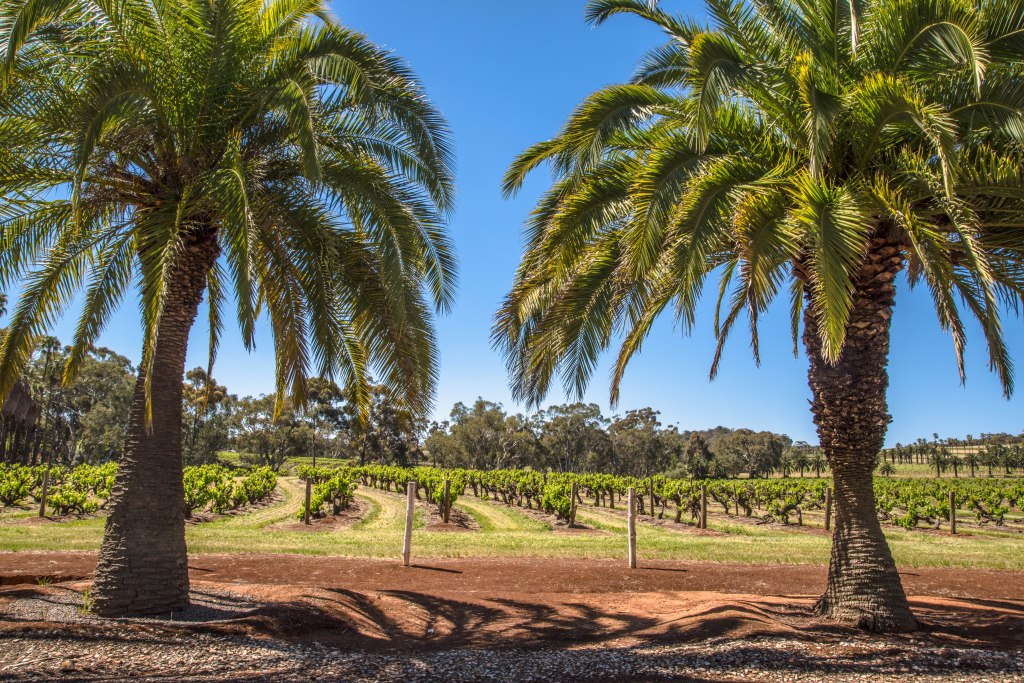
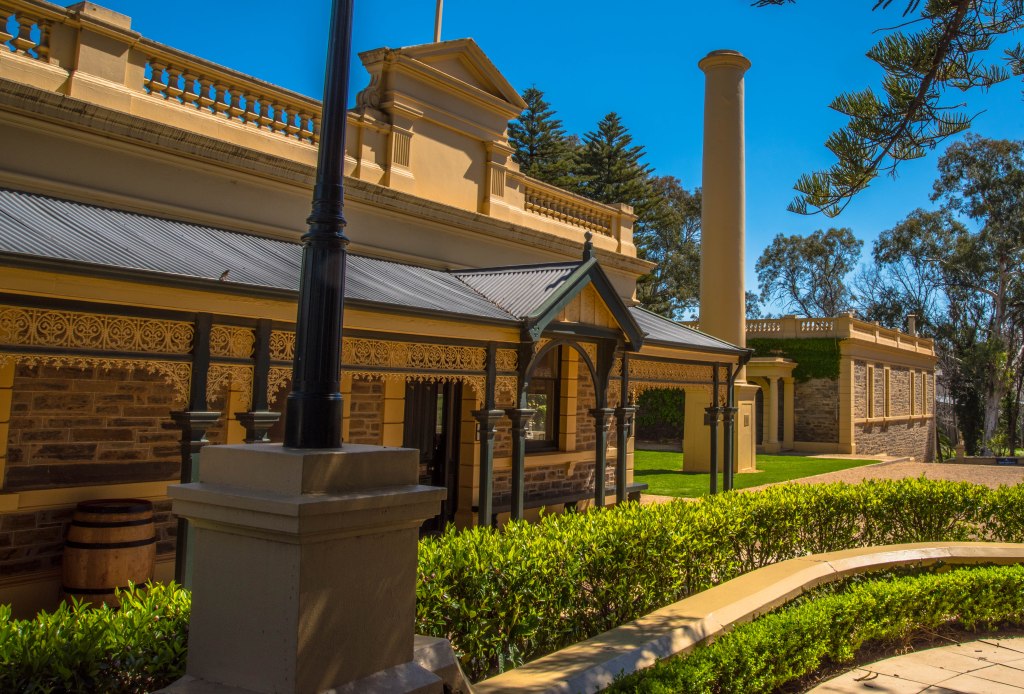
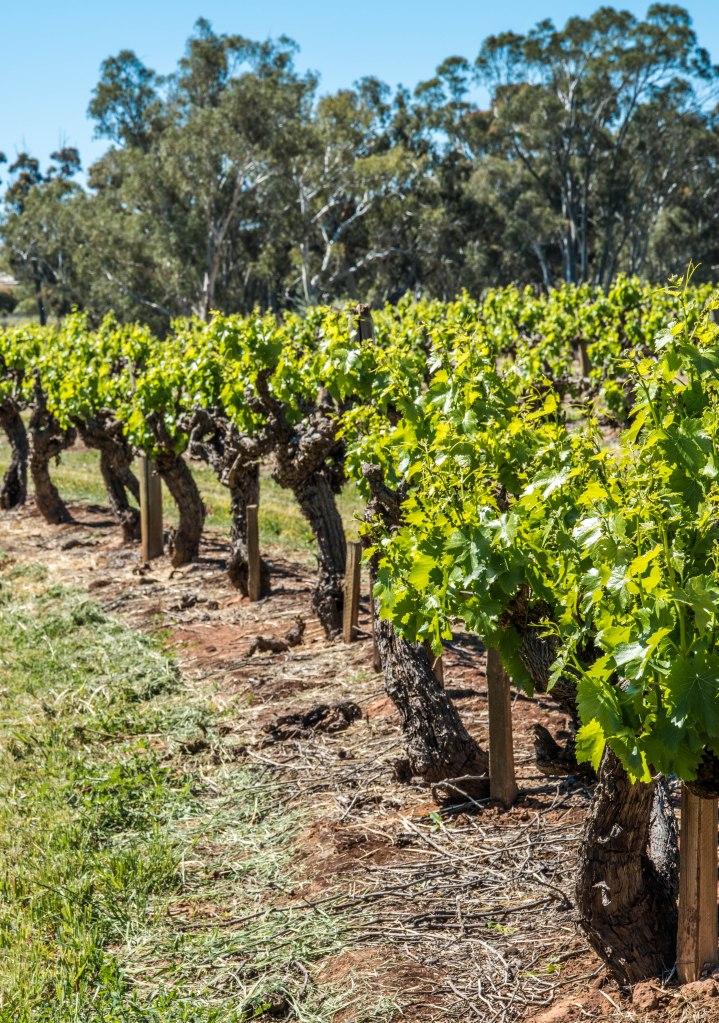
Now everyone is familiar with one of Australia’s most famous wine growing regions, the Barossa Valley encompassing the towns of Tanunda, Angaston and Nuriootpa with a total area approximately 13 by 14 kilometres. Shiraz grapes are the local speciality as are the stone cottages, homes and Lutheran churches throughout the region, testament to a 19th-century wave of German settlers.
Interestingly, the three towns within the Barossa present different personalities as a direct result of the original settlers…….
- Tanunda settled by German settlers, with long-standing traditions dating back to the 1840s coming from Prussian Silesia and is still very evident today.
- Angaston, in contrast, is considered the English town as it was settled predominantly by Cornish miners and others from Britain.
- Nuriootpa was influenced by both the German and British settlers, and today is the commercial hub of the Barossa.
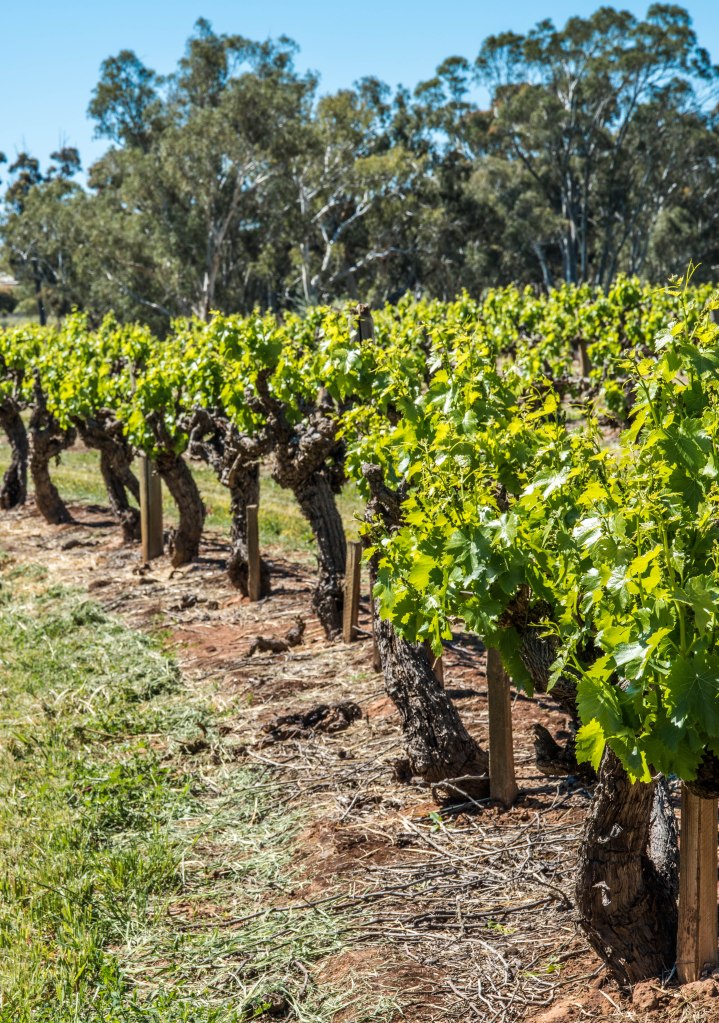
I found the hills of Angaston reminded me of those around the Balhannah to Birdwood region of the Adelaide Hills. They are steeper than rolling, with one paddock covered in grapevines then the next is grazed by sheep, properties are further apart in the hillier areas, whereas in the valley floor the grapevines dominate. The areas grazed by sheep or with the odd hay crop sown are parkland cleared, some paddocks are quite rocky, these are used for grazing stock.
On the valley floor the grapevines are in abundance from Nurioopta to Angaston and south to Tanunda. This triangle is the Barossa Valley with the Eden Valley further to the east and the Clare Valley further to the north beyond Kapunda.
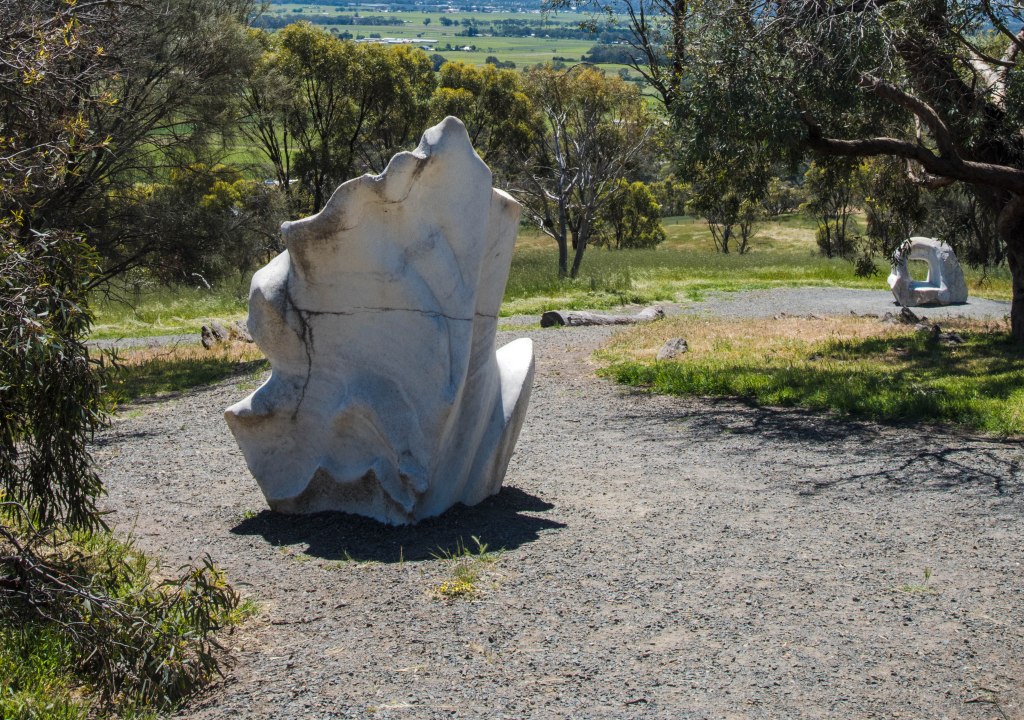
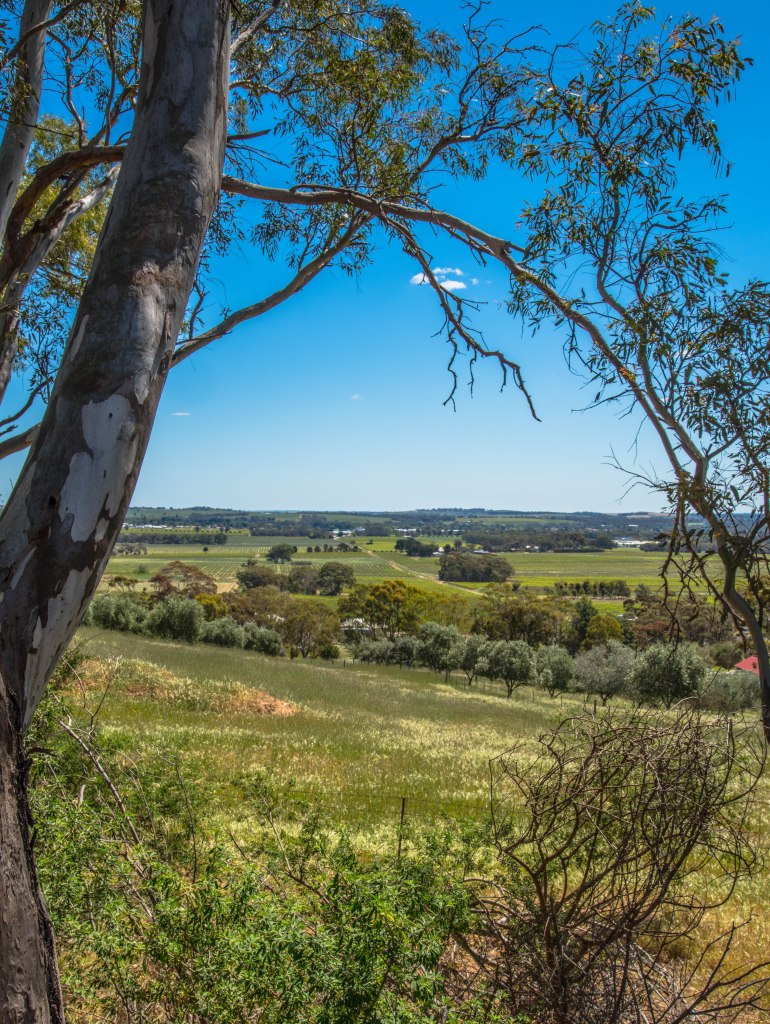
Scuptures above Angaston; view from the hill back towards Angaston
The Barossa Valley derives its name from the Barossa Range, which was named by Colonel William Light in 1837 in memory of the British victory over the French in the Battle of Barrosa, in which he fought in 1811. Note the name “Barossa” was registered in error, due to a clerical error in transcribing the name “Barrosa”, interestingly these errors are still made today, despite the spell check technology.
The region has a strong German Lutheran history, and many residents identify themselves as Lutherans and some towns have more than one Lutheran church, which are built of the traditional stone and complete with spires and ornate building practices. Many towns with private schools/colleges are generally Lutheran, some of these schools have been functioning for decades.

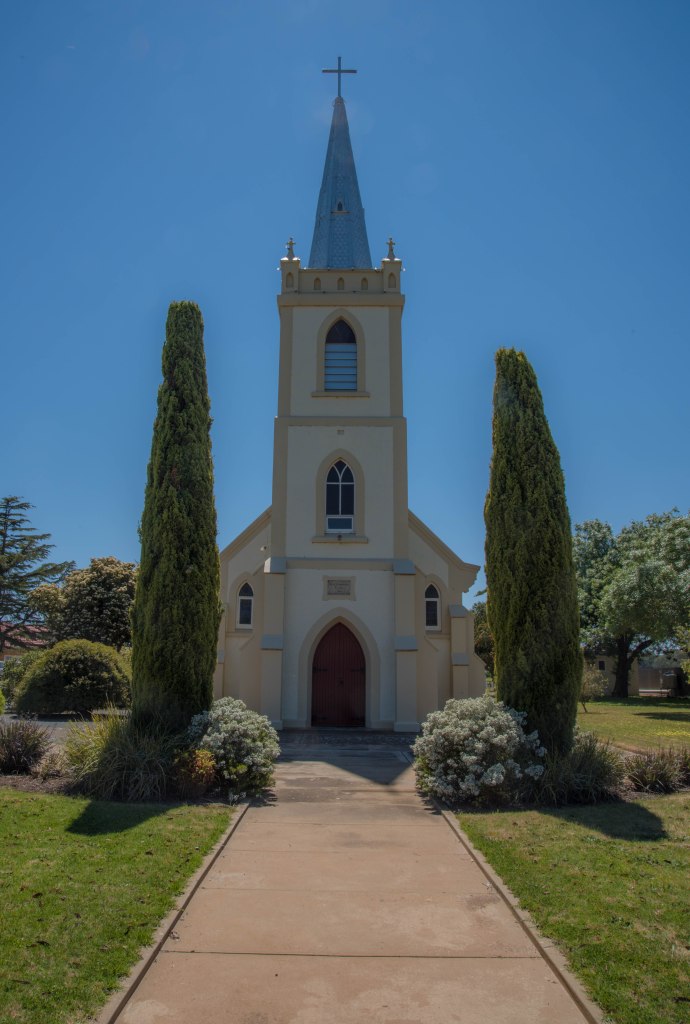
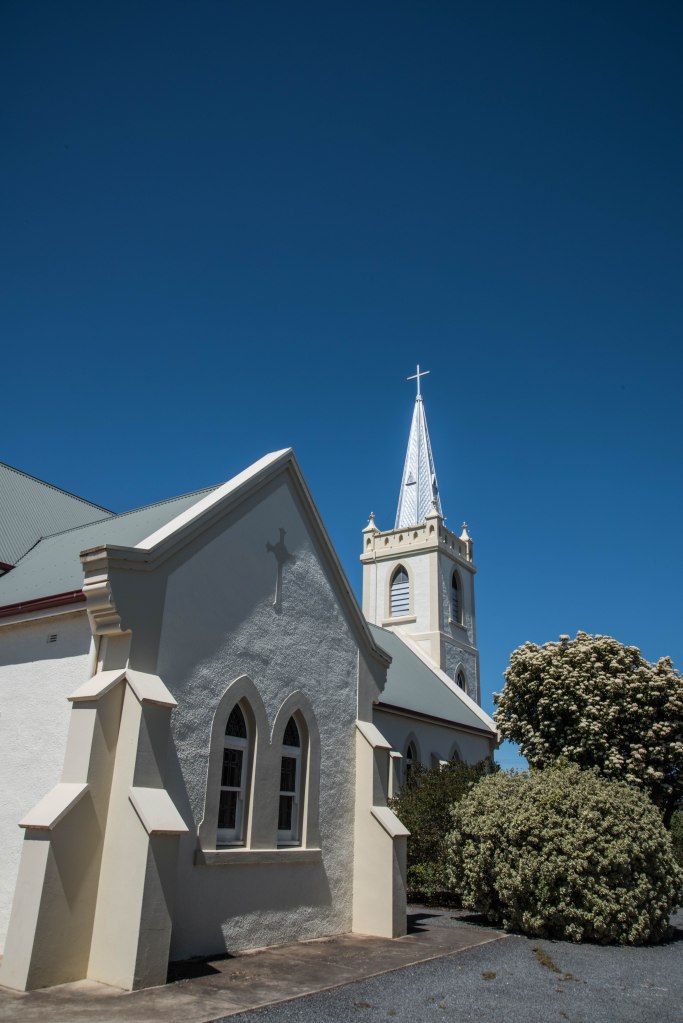
Locating ourselves in Kapunda twenty minutes from Nurioopta, enabled us to explore the Barrossa Valley and other areas to take in the history and beauty of the region. There are just so many beautiful things to see, taste, explore and experience in the Valley. As you cannot do them all in a few days, we selected what we wanted to explore with wine tasting limited to only a couple of wineries, Whistlers, Chateau Tanunda and the Underground Cellar; a drive through the region and a couple of other experiences.
One of the most interesting structures for the region is the Barossa Community Co-operative Store formed in 1944. “The Co-op”, is Australia’s leading retail co-operative and is the largest and longest standing consumer co-operative in Australia. It is a community asset that fulfils a social function by providing an informal meeting place for people in the Barossa and returns money back into the community.

On the bucket list for the Barossa was Maggie Beers farm. We enjoyed a sumptuous lunch in the restaurant on the farm, experiencing one of Saskia’s special dishes before venturing out to the large duck pond, the ducks were missing, but the turtles were sunning themselves on the edge of the lake that was filled with the clearest pristine water. After enjoying the turtle’s antics, we headed into the farm shop to do taste testing and purchase some goodies from the incredible range. Now, I did want to do a cooking class here, but these are now rarely held and Maggie doesn’t do them anyway, so we had to be content with a demonstration by one of Maggie’s cooks at the farm shop.
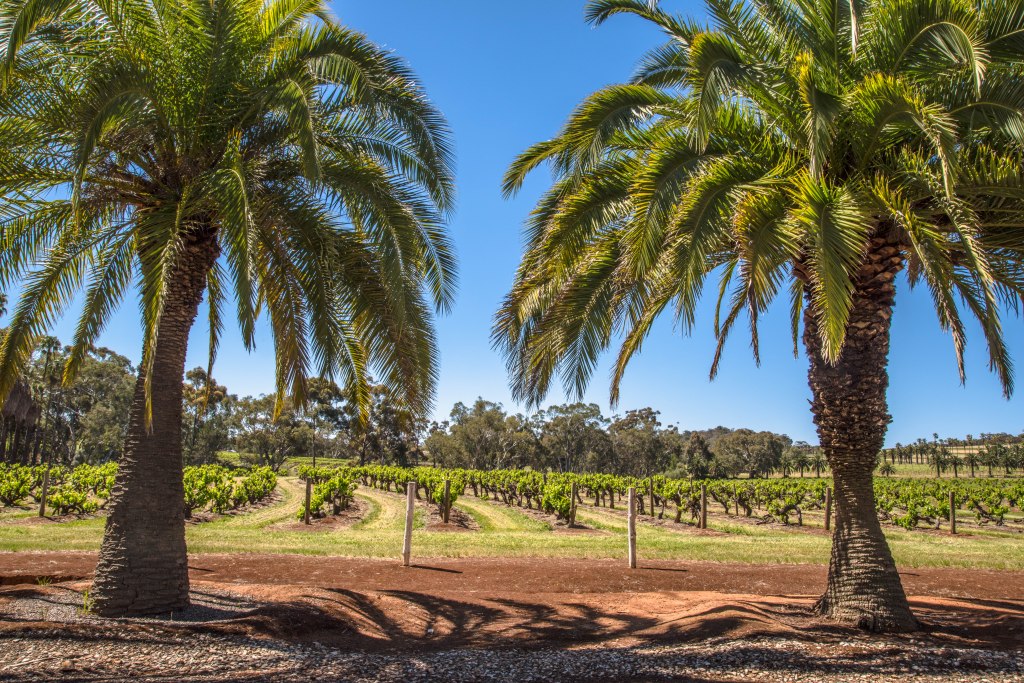
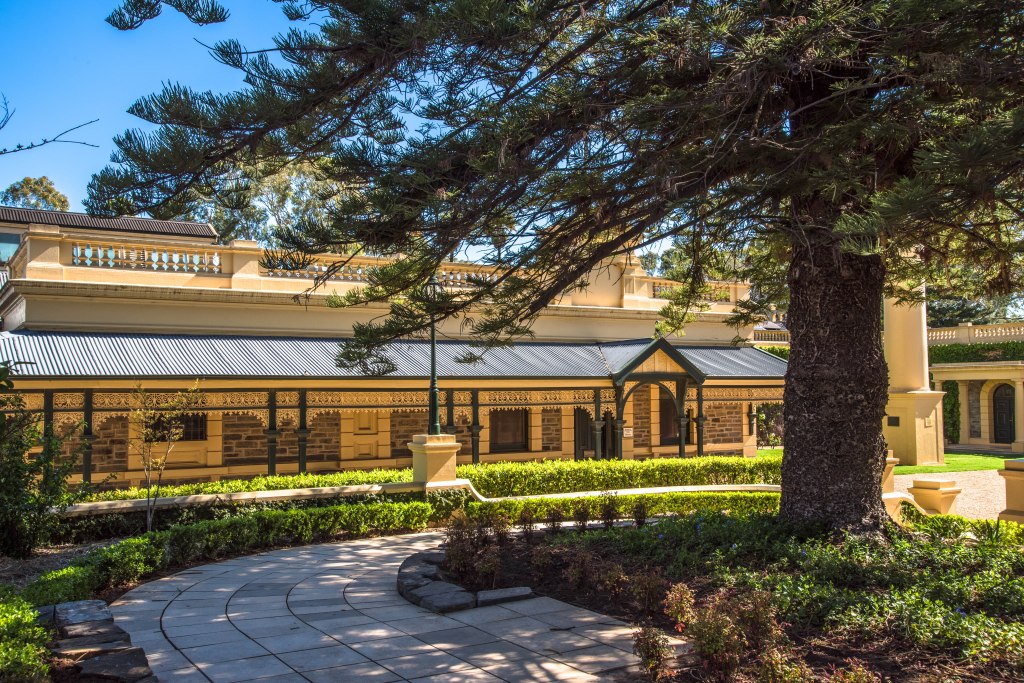
The historic palm trees with the last of the original vines planted; the well maintained historic Seppeltsfield building.
A drive of the region via the history trail takes you through the hills and valleys of the Barossa. Seppeltsfield was by far the most incredible winery with an amazing history, one of Australia’s oldest wineries, was founded in 1851 by Joseph Ernst Seppelt who emigrated with his family from Prussia (now Poland) to Australia in 1849 to break free from political and economic unrest and potential persecution. Sadly, Joseph Seppelt did not live to see the completion of his winery, as he died in early 1868.
The buildings are continually restored to maintain the incredible infrastructure of the winery and the wonderful old buildings. Seppeltsfield was a village in its own right, where all the workers lived and worked and as you drive along Seppeltsfield Road between the majestic palm trees you gain a feeling of pride from the Seppelt family and their purpose. As of 1984, the winery is not longer in the Seppelt ownership, but Joseph’s legacy lives on. No wine tasting here, this was purely to explore the wonderful buildings.


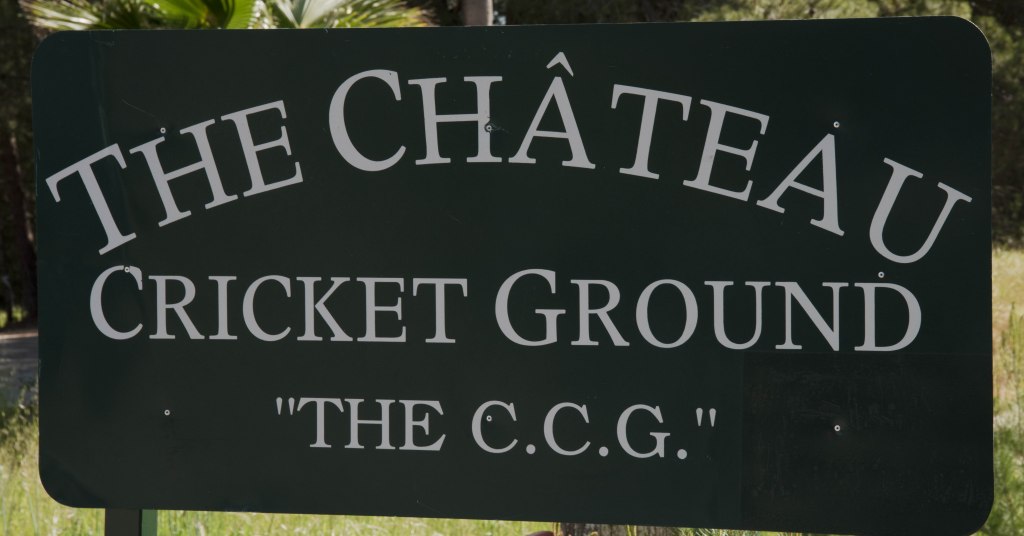

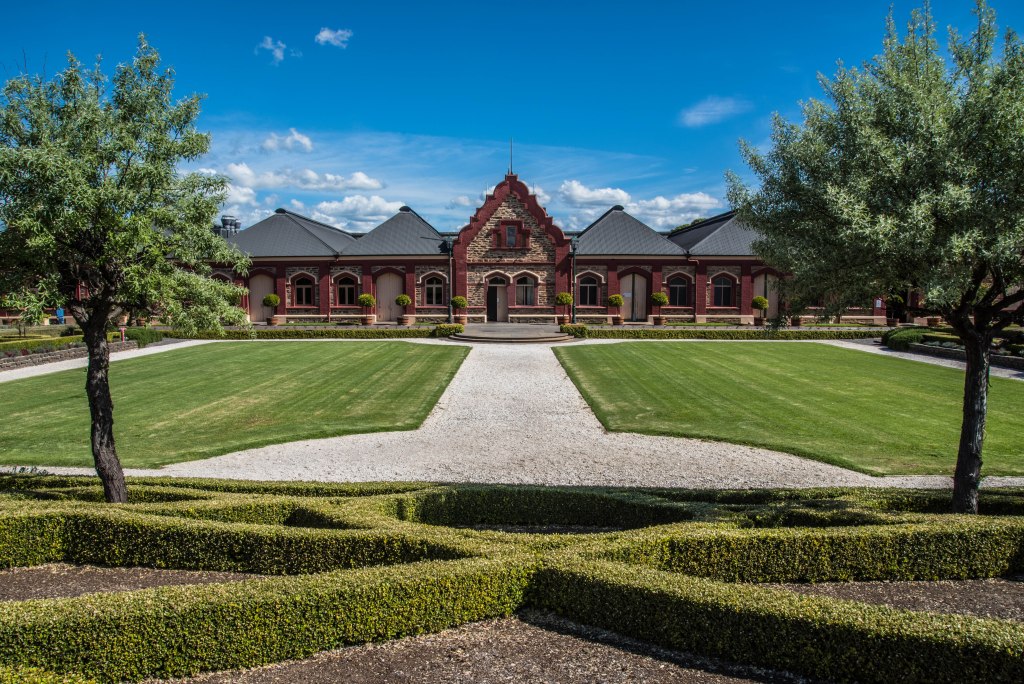
Chateau Tanunda was another winery of choice and this time we did some wine tasting at this magnificent building. Château Tanunda was established in 1890 after an opportunity for large wine export to Europe was identified. Working together with Barossa growers including John Basedow and many smaller investors, £38,700 was raised to build the Chateau Tanunda winery building. With high unemployment in Australia at the time due to many strikes and a drop in foreign investment, the Barossa had a large supply of skilled stonemasons ideal for the construction of the large stone building.
From 1916 to 1998, the Chateau was owned by the Seppelt family before the business and structure was restored by the Geber family who purchased it in 1998. Although the winery is well known for their brandy, today they have Shiraz, Cabernet Sauvignon, Grenache, Chardonnay, and Riesling and a blend. We chose 3 bottles and can highly recommend the ‘Grenache-Shiraz-Mourvedere’ blend.
Before leaving we inspected the “CCG”, built and tendered to national cricket grounds level, and where several state games are often played. There is also a beautifully appointed “Croquet” area on the grounds.
If coming to the Barossa, there is so much more than wine and food, as we discovered. Explore the history as that is what has made this region so vital to tourism for SA.
Freeling, Greenock and Kapunda
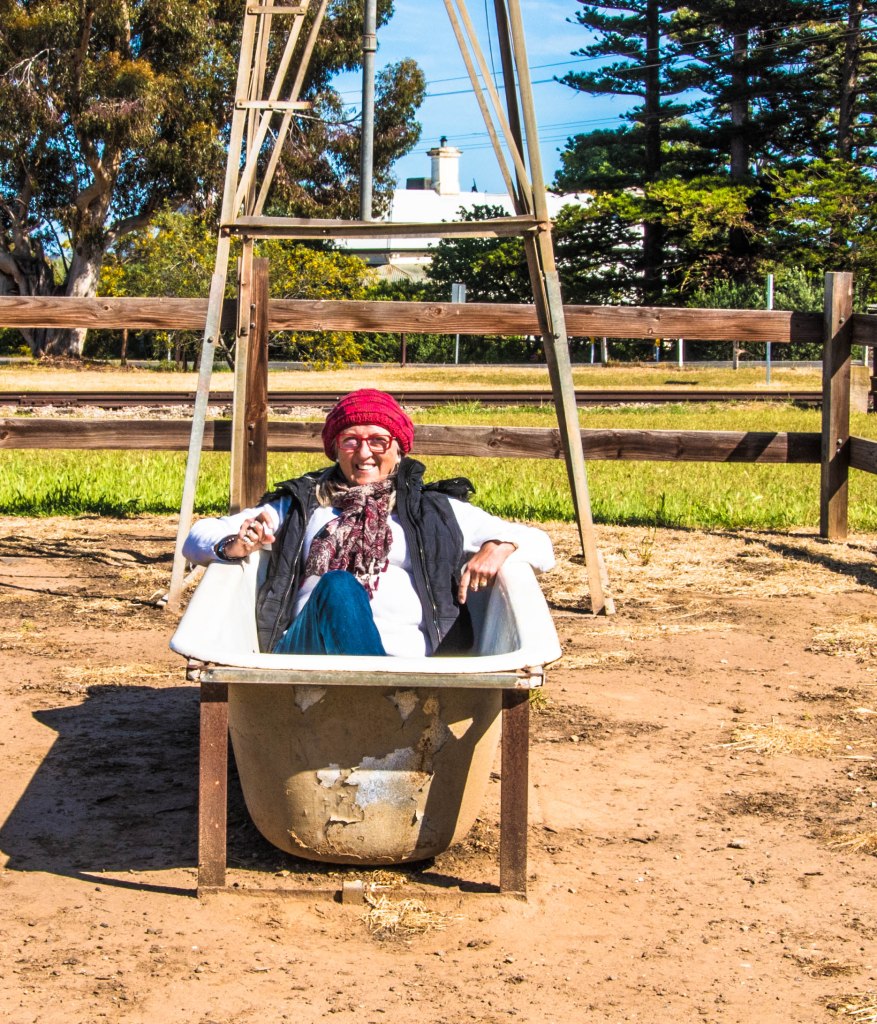
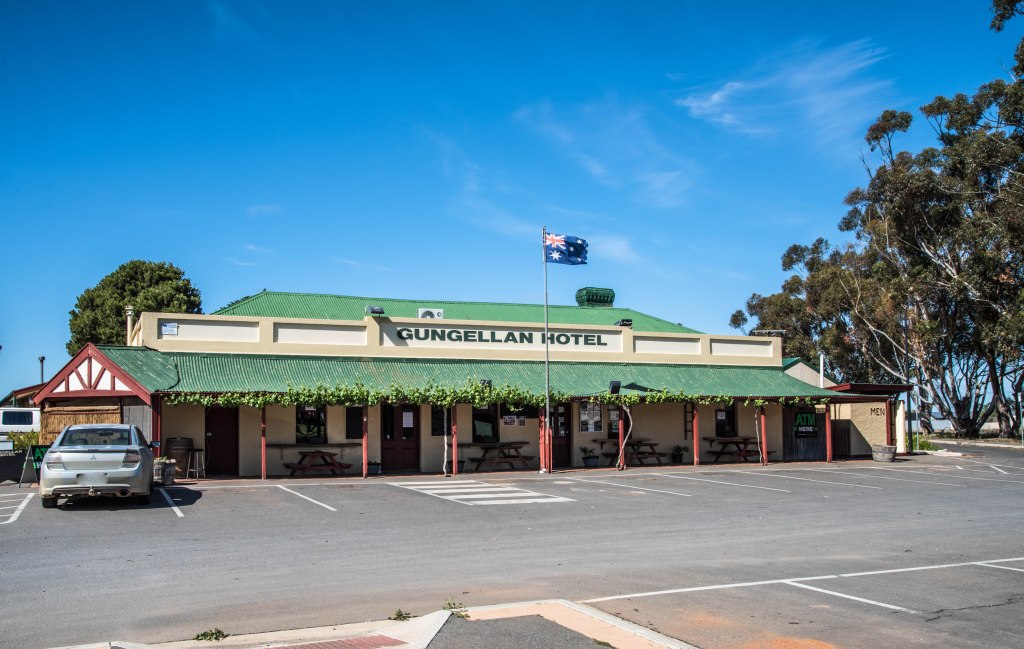

Freeling is a small village located on the western fringe of the Barossa. Freeling is famous for being the film location of McLeods Daughter’s, the fictional town of Gungellan where the fictional property was located nearby. The town of Freeling still has the original Gungellan Garage situated on the main drive into town, the Gungellan Hotel (has retained the name since the series), and in the memorial park across from the hotel is the windmill complete with bathtub that featured in one of the episodes, where you can have your photo taken to replicate the scene. The Freeling Hotel, across the road serves a great meal as does the Gungellan Hotel.
Between Kapunda and Nurioopta is the quaint town of Greenock, established in 1851, we took the time to walk around this little community sitting on the fringe of the Barossa. Greenock is filled with gorgeous little historic cottages, fabulous little shops and cafes.
Kapunda at the southern end of the Clare Valley, is both a wine region and farming area. Copper was also mined there, discovered in 1842 it was the first mine in SA and played a significant role in history as it stimulated the SA colony saving it from near bankruptcy. Although a smaller quantity of copper was found compared to Moonta, it was a prime ore grade.


Kapunda’s heritage also includes a long list of wonderful buildings and ruins which can be discovered on the Heritage Trail.
The most significant factor of the town’s history is the Sidney Kidman story. Kidman first came to the town as a young lad of 13, camping there on his way north searching for work. He returned to Kapunda in the 1880’s and remained there until 1921 during which time he met and married his wife. Kidman made his fortune from his base in Kapunda, travelling throughout the northern areas of Australia, building an incredible empire from nothing. The Kidman trail provides an interesting story of where he drove stock south from the northern regions. The town is full of historical information and buildings relating to Kidman’s story including a tastefully put together group of photographs and specific artefacts of the Kidman story is displayed at the town’s Library/Information Centre.
Kidman certainly ensured he left a legacy, one of these was his magnificent home “Eringa” he purchased for his loving wife Bel. It was their second home. Kidman was knighted for his services to the industry, and soon after that presentation he and his wife moved to Adelaide and donated their home to the Education Department to use solely for the local high school. Today, the building still forms a major part of the Kapunda High School.
 Travelling Falconers